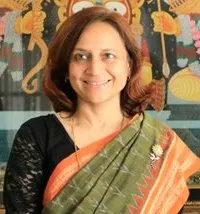
26 weeks’ maternity pay allegedly withheld from former employee; CEO Gitanjali Angmo skips final hearing, Labour Court to pronounce orders on Nov 7
LEH: Serious questions are mounting over the functioning and accountability of Sonam Wangchuk-founded Himalayan Institute of Alternatives, Ladakh (HIAL), after a former woman employee accused the institution of denying her 26 weeks of statutory maternity benefits, cutting off her official communication access after childbirth and leaving her employment status unresolved.
The case, which is scheduled for final orders by the Labour Court in Leh on November 7, has brought HIAL founder Sonam Wangchuk and CEO Gitanjali J. Angmo under renewed scrutiny over the institution’s treatment of its employees and its response to allegations of violations of basic labour protections.
What makes the case particularly significant is the official record of repeated non-appearance of the employer’s representatives before the Labour Authority, despite multiple notices and a final opportunity to respond. According to the proceedings, Angmo allegedly failed to appear even on September 15, the date specifically fixed for her appearance and recording of her statement, prompting the authority to reserve the matter for final orders on November 7, PTI reported, quoting Labour Court sources.
The dispute involves Amina Khatoon, who joined HIAL’s enterprise arm, Sheshyon Innovations Private Limited, as Purchase Manager in August 2023 on a monthly salary of Rs 50,000. Her appointment letter, dated June 23, 2023, was signed by Angmo in her capacity as Co-founder, CEO and Dean, and specifically identified her as Khatoon’s reporting manager.
According to documents available with “The Earth News”, Khatoon formally informed the institution about her pregnancy through an email dated February 22, 2024, and offered to ensure a smooth handover of responsibilities before proceeding on maternity leave.
She subsequently alleged that despite working throughout her pregnancy and submitting the required medical and delivery documents, HIAL withheld her salary for the entire 26-week maternity period to which she claimed entitlement under the law and her employment contract. The allegations become more serious when she describes what allegedly happened after childbirth.
Khatoon claimed that within approximately a month of delivering her baby, Angmo removed her from the institution’s official team WhatsApp group and her official email account was blocked. She alleged that the management neither clarified her employment status nor communicated when she could resume work.
When she subsequently reported to the office, she was allegedly asked to return and wait for the HR department to inform her about rejoining, but no clear communication followed. The employee further alleged that the institution failed to issue her an experience certificate, adversely affecting her professional prospects, including a potential employment opportunity with Engineers India Limited (EIL).
She maintained that repeated attempts to obtain a resolution through emails and messages addressed to Angmo, the HR team and Wangchuk himself over several months yielded no satisfactory response, ultimately forcing her to approach the Labour Authority.
Although the formal labour proceedings name Angmo and HIAL’s HR representative as respondents, the complaint also places Wangchuk in the picture, with Khatoon alleging that she repeatedly sought his intervention without receiving a resolution.
As the founder of HIAL, Wangchuk’s role in ensuring institutional accountability inevitably comes under public scrutiny, even though the available proceedings do not name him as a respondent in the case. The central question is not merely whether an employee’s payment dispute will be resolved by the Labour Court, but whether an institution founded and publicly promoted as an alternative model for society has adequately protected the statutory rights of its own workforce.
HIAL has built its public identity around alternative education, social transformation, sustainability and the empowerment of Himalayan communities. Yet the allegations by a former employee raise questions about whether those principles were reflected in its internal employment practices when a woman employee sought maternity protection.
If established, the allegations would represent a serious contradiction between the institution’s public advocacy and its treatment of a woman worker during one of the most vulnerable phases of her life. More troubling is the Labour Authority’s record of repeated non-appearance. An official notice dated August 28 records that the respondents appeared on July 13 but failed to attend the hearings scheduled on June 29, July 7 and August 17.
The authority described the repeated absence as reflecting deliberate non-compliance with statutory proceedings and issued a last and final opportunity for appearance on September 15, warning of coercive legal action and other consequences permissible under law.
The proceedings were initiated under Section 15 of the Payment of Wages Act, 1936, read with Section 45 of the Code on Wages, 2019, while the maternity benefits dispute also invokes the Maternity Benefit Act, 1961.
The authority had directed the employer to produce wage registers, attendance records, muster rolls, wage slips and proof of payment. Its notice also warned that failure to participate could result in an ex parte decision and statutory consequences if violations were established.
The maternity benefits dispute comes at a time when HIAL is already facing several administrative and legal controversies.
In August 2025, the Ladakh Administration cancelled the institute’s allotment of 1,076 kanals of land, citing alleged failure to execute the lease deed, non-payment of licence fees and violations of land-use conditions.
More recently, on November 1, the Leh Administration issued a notice to Angmo directing HIAL to halt classes and activities at its newly opened Desert Flower School pending a final decision in proceedings before the High Court of Jammu and Kashmir and Ladakh.
In the High Court proceedings, the Administration has also levelled allegations against Wangchuk concerning the use of public land and the alleged mobilisation of HIAL and Students’ Educational and Cultural Movement of Ladakh (SECMOL) staff and students for protests. These allegations remain subject to adjudication.
Wangchuk and Angmo have rejected the Administration’s allegations, describing the action as a witch-hunt intended to silence dissent in Ladakh.
However, the maternity benefits dispute is a separate matter involving an employee’s claimed statutory entitlements and the institution’s response before a labour authority. The November 7 order is now expected to bring greater clarity to the employee’s claims and the legal consequences, if any, for the employer.
For Wangchuk and HIAL, the case raises questions that go beyond the courtroom: what happened to the maternity benefits claimed by the former employee, why was her employment status allegedly left unresolved, why did the institution’s representatives repeatedly fail to participate in the proceedings, and why did the employee’s repeated appeals for intervention, including those addressed to the founder, allegedly fail to produce a resolution?
An institution that seeks to present itself as an alternative to conventional systems must also answer questions about its own accountability. The rights of employees cannot become secondary to an institution’s public image or its larger ideological ambitions. The Labour Court’s November 7 orders will be closely watched, not only by the complainant but also by those seeking answers about the employment practices and institutional accountability of Wangchuk-founded HIAL.