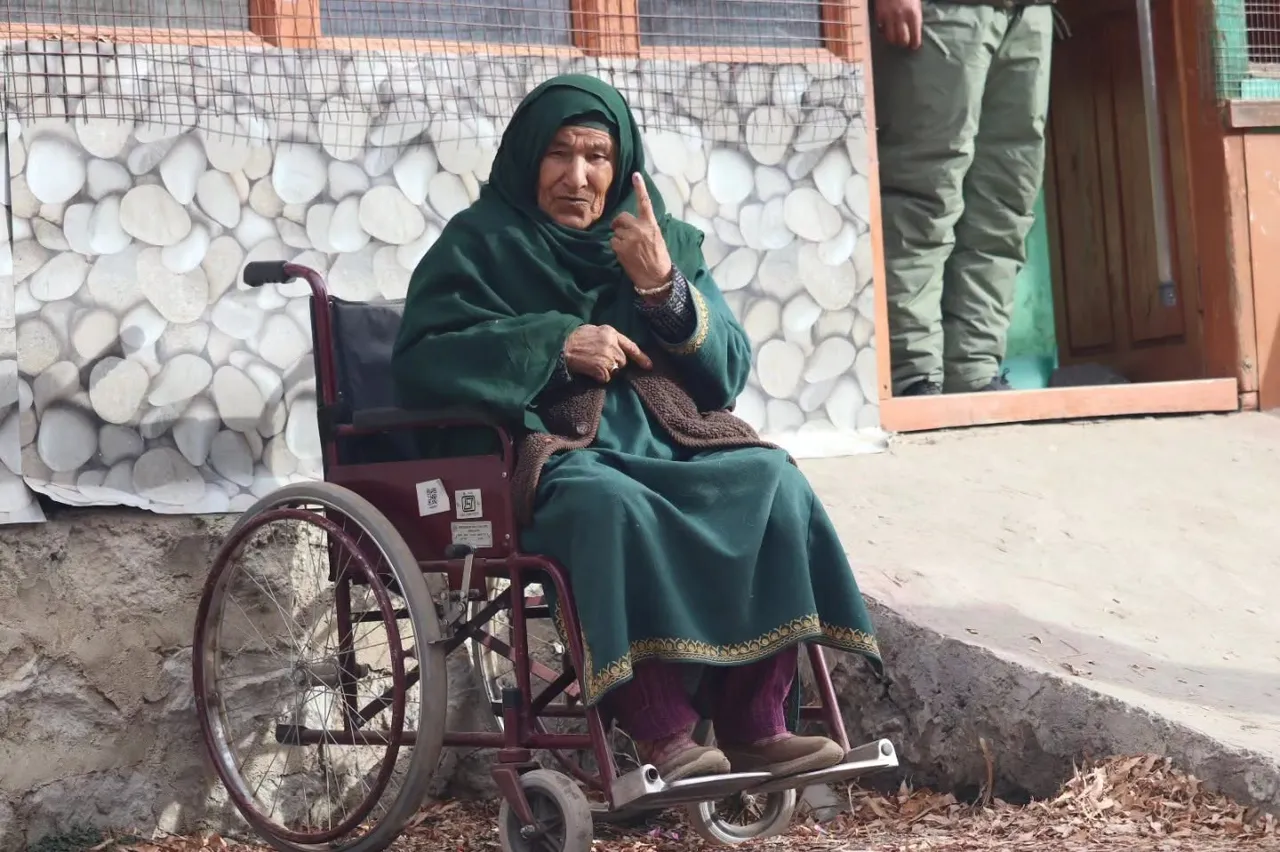
From an 87-yr-old former Namberdar to a voter negotiating his way with a walking stick, senior citizens offer a powerful lesson in democratic commitment despite biting cold and physical challenges
HABEEL SAGAR
LEH/KARGIL: Years may have slowed their footsteps, weakened their limbs and made the bitter cold more difficult to endure, but they have not diminished their determination to exercise their democratic right.
As Ladakh voted in the Panchayat and Municipal elections on Saturday, some of the most compelling stories from polling stations came not from first-time voters but from elderly citizens who refused to allow age, physical limitations or harsh weather to keep them away from the ballot box.
Among the most remarkable examples were 87-year-old Sherab Norphel and 84-year-old Mohd Hassan, both former Namberdars of Halka Yarlok in Chuchot Gongma, who proudly exercised their franchise in the Ladakh Municipal Elections 2026.
Their participation offered a remarkable glimpse of democratic commitment, with senior citizens from different parts of Ladakh making their way to polling stations, some with walking sticks and others requiring assistance, to exercise a right they have cherished through decades of changing political and social circumstances.
Their participation was particularly symbolic. Having served their communities in positions of local responsibility in the past, the two elderly men returned to the electoral process as ordinary voters, demonstrating that democratic participation does not end with the completion of public service.
In Sankoo, 84-year-old Akhone Hussain of Saliskote made his way to the polling station with the support of a walking stick. His journey, captured by the District Information Office Kargil, became one of the most striking images of the polling day.
The determination of elderly voters was equally visible at Barchay polling station in Kargil, where an elderly woman, assisted by volunteers, was helped towards the polling booth to cast her vote. Her effort illustrated how community support can help ensure that physical limitations do not become a barrier to electoral participation.
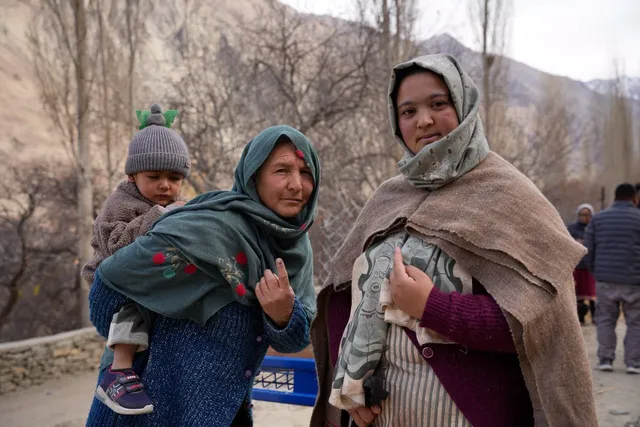
At Tia polling station, two elderly women were seen smiling cheerfully after participating in the electoral process. Their photographs, shared by DIPR Ladakh, conveyed a message that needed little explanation: the satisfaction of exercising one’s democratic right is not restricted by age.
In Changthang’s Rongo polling station, senior voters Tashi and Dolma proudly displayed their inked fingers after casting their votes in the Panchayat Elections. Their participation added another memorable chapter to the day’s democratic exercise in one of Ladakh’s remote regions.
Perhaps one of the most candid accounts came from 82-year-old Abdul Aziz, who spoke about his experience of voting despite the severe cold.
“Even today, I am coming here to cast my vote. I am grateful that even at this age, I am able to do this,” he said, while acknowledging that the cold weather was particularly difficult for elderly people.
His words reflected both the physical challenges faced by senior citizens and their determination not to remain absent from an important democratic exercise.
The participation of elderly voters was also highlighted in Drass, where temperatures reportedly touched minus seven degrees Celsius. Despite the biting cold, senior citizens continued to reach polling stations, joining younger electors in exercising their franchise.
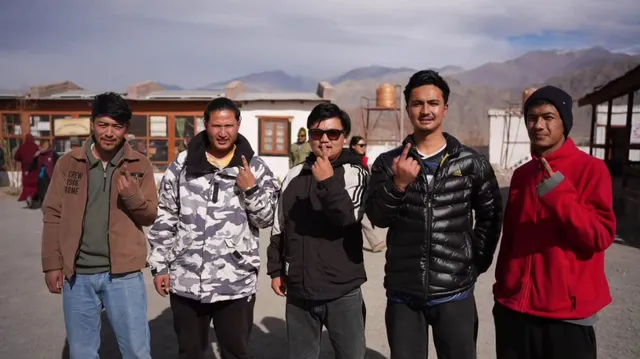
At Goma polling station in Kargil, voters across generations, including senior citizens and women, participated in the Municipal Elections, reinforcing the inclusive character of the electoral exercise.
These stories carry significance beyond the individual act of voting. Panchayat and Municipal institutions deal with issues that directly affect people’s everyday lives, including local infrastructure, drinking water, sanitation, civic facilities and community development. For elderly citizens, many of whom have witnessed decades of transformation in Ladakh, the opportunity to participate in selecting local representatives remains an important expression of their stake in the future of their communities.
The November 21 elections, being held after an eight-year gap since the previous Panchayat and Municipal polls in 2018, have brought different generations together at the polling stations.
While young first-time electors represented a generation entering democratic participation, the elderly demonstrated the enduring value of a right they have exercised over many years.
In an electoral exercise often measured through turnout percentages, political calculations and victory margins, these senior citizens offered a different measure of democratic strength — the willingness of people to participate despite the difficulties that come with advancing age. For them, voting was not merely a constitutional right. It was a responsibility they were unwilling to surrender to age.