LEH: A delegation of Bharatiya Janata Party (BJP) leaders on Sunday urged Lieutenant Governor Vinai Kumar Saxena to initiate broader stakeholder consultations on Ladakh’s recently introduced excise policy, contending that concerns voiced by sections of civil society stem from the absence of wider public engagement during the policy’s formulation.
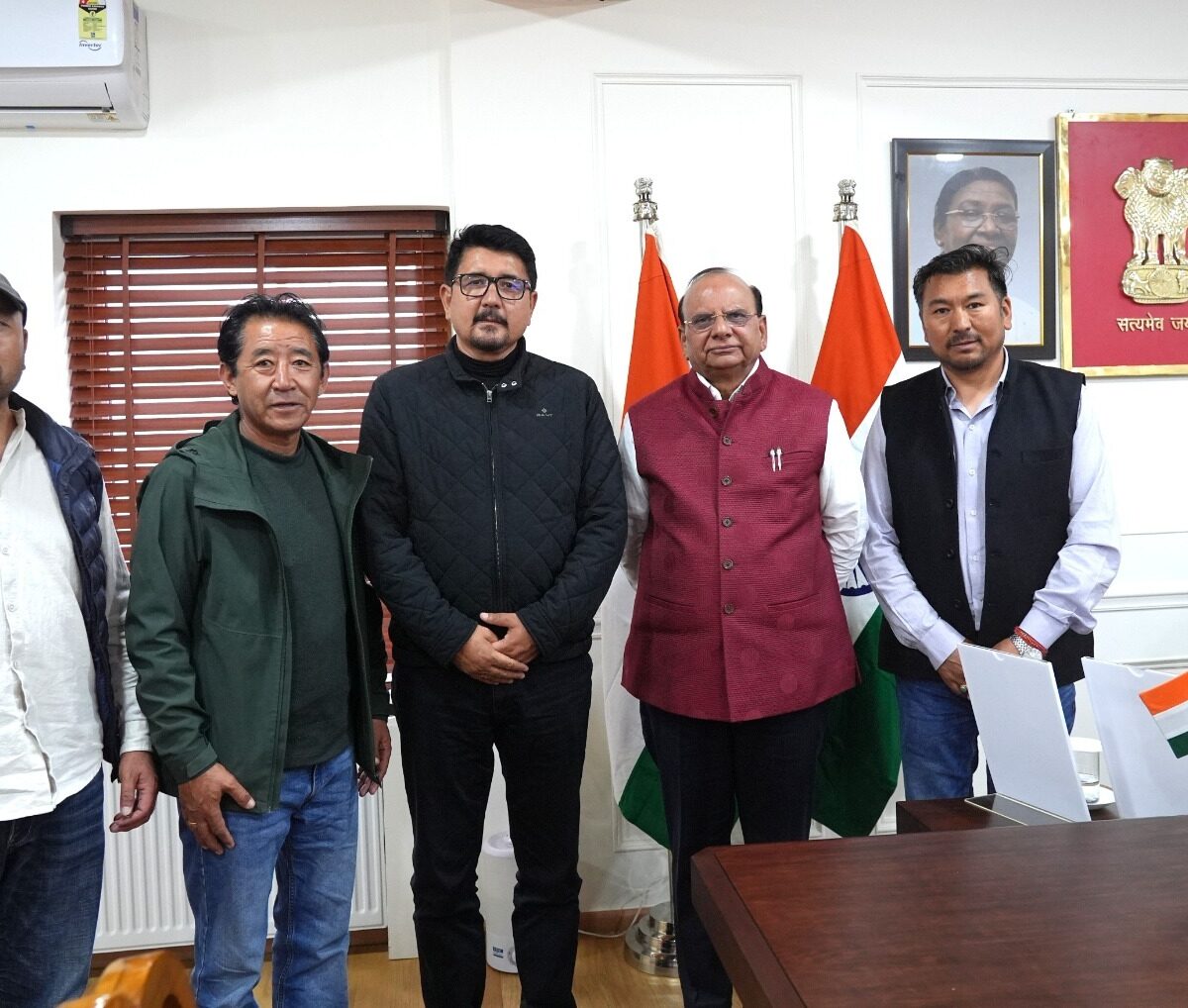
The issue took centre stage during a meeting at Raj Niwas, where the delegation called for a balanced and consultative approach to the policy in the interest of effective governance and public welfare.
The delegation, comprising BJP Ladakh President Tashi Gyaltsan Khachu, former Chairman and Chief Executive Councillor of LAHDC Leh Adv. Tashi Gyalson, BJP Ladakh General Secretary Stanzin Lakpa and BJP Zanskar General Secretary Rigzin Tsewang, conveyed that meaningful dialogue with stakeholders was necessary to address public apprehensions and build consensus around the policy framework.
The leaders urged the Union Territory Administration to engage civil society groups, community representatives and other stakeholders through a structured consultative process before proceeding further with implementation-related measures.
The delegation also flagged concerns over the illegal liquor trade and called for stringent action against black marketing and bootlegging. Stressing the need for stronger enforcement mechanisms, the leaders urged the administration to maintain strict vigilance to curb unauthorised sale and distribution of liquor across the region.
Earlier, the delegation congratulated the Lieutenant Governor on his recent visit to Mongolia for receiving the Holy Relics of Lord Buddha’s two disciples and appreciated his efforts towards reviving and preserving the spiritual and historical legacy of the late Kushok Bakula Rinpoche.
According to the statement, the Lieutenant Governor assured the delegation that the concerns raised during the meeting would be examined with due seriousness, keeping in view the broader interests of the people of Ladakh.
The meeting comes against the backdrop of growing public discussion over the excise policy, which has emerged as a subject of debate among community groups and civil society organisations across the Union Territory.