BJP Candidate thanks UT admin for smooth conduct of Panchayat, Municipal polls
ZANSKAR: With Zanskar preparing for its first-ever Hill Council, senior BJP leader and party’s district president Stanzin Lakpa has set out an ambitious development vision for the region, pitching a Smart City model, modern civic infrastructure and a governance framework that safeguards its distinct cultural identity, while calling for a transparent and cooperative electoral contest.
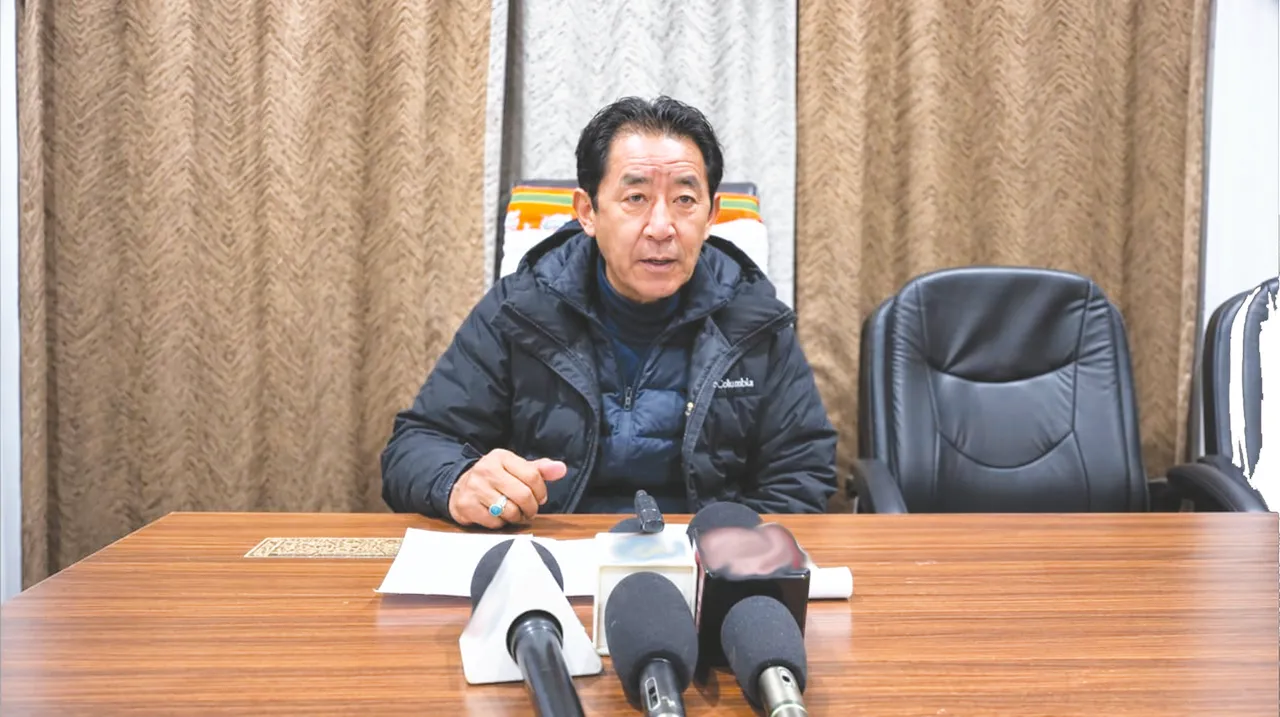
Addressing a press conference in Zanskar on Saturday, Lakpa, who is also the BJP’s candidate for the forthcoming Ladakh Autonomous Hill Development Council (LAHDC) elections in the region, outlined his political and developmental priorities, placing infrastructure modernisation, systematic urban planning and preservation of traditional architecture at the centre of his proposed agenda for the first Hill Council.
He also placed on record his appreciation for the District Administration, particularly the Deputy Commissioner (DC) and Senior Superintendent of Police (SSP), for the successful conduct of the Panchayat and Municipal elections, acknowledging their role in managing the electoral exercise.
With the forthcoming LAHDC polls expected to shape the region’s institutional and developmental trajectory, Lakpa called upon political parties, leaders and party workers to uphold transparency, cooperation and democratic decorum throughout the election process.
At the heart of his proposed development agenda is the transformation of Zanskar through a Smart City model, which he believes could provide a framework for modernising infrastructure and improving civic amenities. His vision envisages planned road-side development, dedicated parking facilities, public parks and systematic urban planning to address the region’s growing infrastructure requirements and improve the quality of life of residents.
However, Lakpa maintained that modernisation should not come at the cost of Zanskar’s cultural identity. He emphasised the need to preserve traditional architecture, local heritage and the region’s distinctive cultural character while pursuing infrastructure-led development, advocating an approach that brings contemporary facilities in harmony with its traditional landscape.
The BJP leader also underscored the importance of an efficient administrative apparatus, arguing that capable officials, institutional coordination and effective service delivery would be essential to translating developmental aspirations into tangible outcomes. Appreciating the role of the district administration, he stressed the need for a robust governance mechanism to support the region’s development priorities.
Making a political pitch for the BJP, Lakpa asserted that the party was best positioned to facilitate the flow of government resources and developmental initiatives to Zanskar. Invoking the leadership of Prime Minister Narendra Modi and the NDA government at the Centre, alongside the UT administration, he claimed that the BJP’s political and administrative framework could accelerate infrastructure development and modernisation in the region.
He also referred to the influence of social media during the election season, discussing its use by political workers and its growing role in shaping campaign narratives and public engagement. Appealing for restraint and a constructive political atmosphere, he called on party functionaries and leaders to ensure that electoral competition did not undermine the spirit of democratic participation.
Lakpa’s proposed agenda places the emphasis on planned infrastructure development, improved civic amenities, cultural and architectural conservation and administrative efficiency as Zanskar approaches its first Hill Council electoral exercise.