Around 400 questions for each Village Directory and 420 for Town Directory covered; Census authorities to verify grassroots data before authentication, while February 2027 population enumeration preparations focus on non-snowbound J&K
LEH: The Union Territory of Ladakh has completed fieldwork for the District Census Handbook (DCHB), marking an important milestone in preparations for Census 2027, with the verification of village- and town-level data now underway to ensure accuracy and reliability of the information collected.
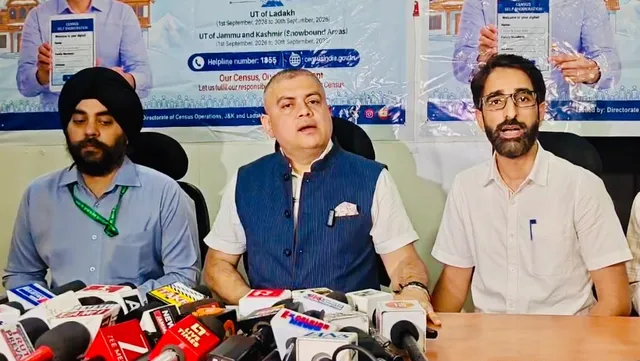
Chief Principal Census Officer (CPCO) and Director Census Operations, Jammu & Kashmir and Ladakh, Amit Sharma, IAS, disclosed this during a press briefing in Jammu on Friday, informing that the DCHB fieldwork had been completed in both Union Territories. CPCO Amit Sharma was accompanied by Joint Chief Principal Census Officer Arun Kumar and Deputy Chief Principal Census Officer Manmeet Singh Loomba.
Following the completion of field data collection, Charge Officers will scrutinise the entries submitted on the DCHB portal for completeness, consistency and accuracy. Wherever necessary, clarifications and rectifications will be sought, particularly in cases involving changes in village or town jurisdictions compared with previous Census records.
The exercise involved approximately 400 questions for every Village Directory and 420 questions for each Town Directory. The verification process is scheduled to be completed in all respects by mid-November 2026, following which the verified information will be submitted to the Directorate of Census Operations for authentication under the prescribed procedure.
For Ladakh, the completed exercise is particularly significant as the District Census Handbook will provide a consolidated grassroots-level database reflecting the availability of basic amenities and infrastructure across villages and towns of the region.
According to Sharma, the information collected under the exercise represents the status of amenities and infrastructure as of December 31, 2025. The Village and Town Directories incorporate details relating to educational institutions, healthcare facilities, drinking water, sanitation, transport, communication and other essential civic infrastructure.
The information is expected to serve as an important reference for district-level planning, administrative decision-making, academic research and assessment of developmental requirements.
While the DCHB fieldwork has been completed in both UTs, the next phase of Population Enumeration is scheduled for February 2027 in the non-snowbound areas of Jammu and Kashmir. Preparations for this phase are being undertaken through coordinated efforts involving the Census Directorate, district administrations and concerned departments.
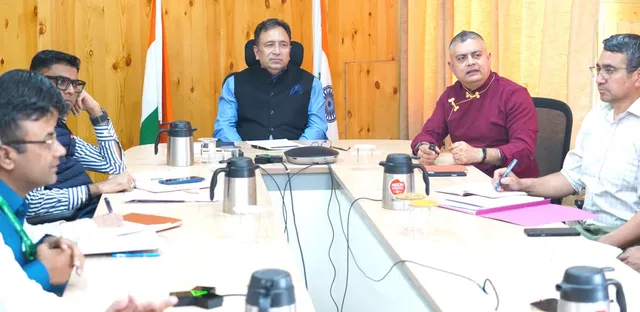
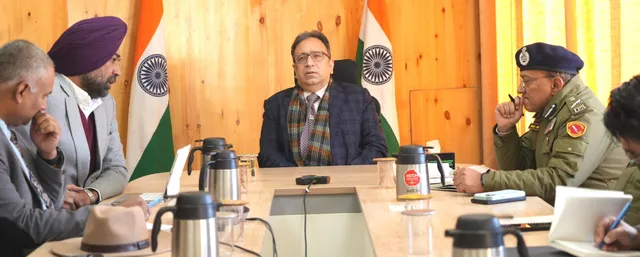
Sharma outlined a phased training schedule for the Census machinery, beginning with State- and district-level officers’ training, which is to be completed by mid-November 2026. Master Trainers will undergo training in the third week of November, followed by Field Trainers during the first and second weeks of December.
Training for Enumerators and Supervisors is scheduled to commence in the third week of December 2026 and continue until mid-January 2027.
He said the forthcoming enumeration would also require special operational arrangements for designated Special Charges, including Defence establishments, Central Armed Police Forces and other institutional establishments. The Directorate will coordinate with the concerned authorities to ensure that enumerators and supervisors are adequately briefed on the prescribed procedures.
Emphasising the need for comprehensive population coverage, Sharma said special attention would be given to the enumeration of the houseless population during the February phase.
Field teams will make arrangements to identify and enumerate people who do not reside in conventional households, including those living on pavements, at transport hubs and other locations identified under Census instructions.
He said the coverage of the houseless population, along with enumeration in Special Charges, would form an integral part of the operational preparations to ensure that no eligible population group is left out of the Census exercise.
Concluding the briefing, Sharma said the Directorate was pursuing two parallel priorities: ensuring the accuracy and reliability of District Census Handbook data through systematic verification and preparing the field machinery for the forthcoming Population Enumeration.
He emphasised that timely training, coordination with district administrations and concerned departments, and adherence to prescribed procedures would be crucial for the successful completion of Census 2027.