Kundra reviews Phase-II roadmap, directs robust awareness drive, intensive training and priority support for snow-bound regions ahead of self-enumeration launch on Aug 17
LEH: The Union Territory of Ladakh has accelerated preparations for the crucial Phase-II (Population Enumeration) of Census 2027, with Chief Secretary Ashish Kundra directing officials to ensure a seamless, technology-driven and inclusive enumeration process that captures accurate population data across the region, including its remote and snow-bound areas.
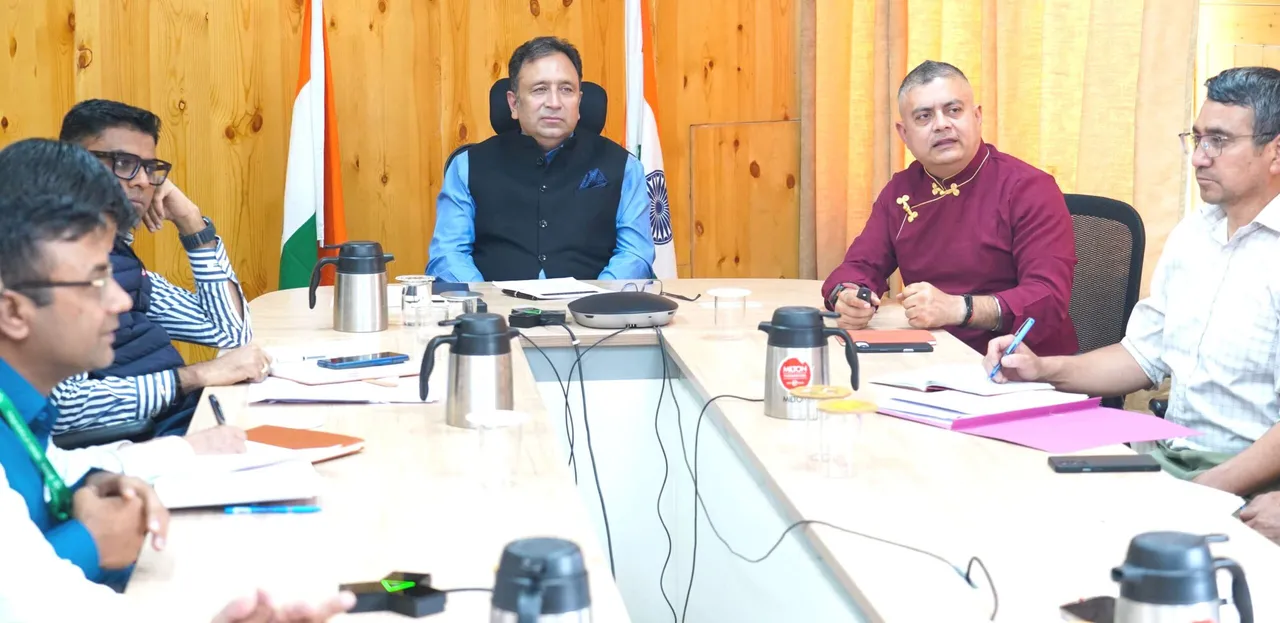
Chairing a high-level review meeting on Wednesday, the Chief Secretary assessed the Union Territory’s readiness for the nationwide census exercise, focusing on operational planning, digital infrastructure, field-level preparedness, public awareness and institutional coordination to ensure the successful implementation of one of India’s largest administrative exercises.
The meeting began with a comprehensive presentation by Amit Sharma, Chief Principal Census Officer and Director, Directorate of Census Operations, Ladakh, who outlined the roadmap for the second phase of Census 2027. He briefed the meeting on the population enumeration strategy, the status of House Listing Operations (HLO), identification of administrative units for Phase-II, training plans for census personnel, deployment of digital enumeration tools, procedures for special and inaccessible areas, publicity initiatives and operational challenges unique to Ladakh’s high-altitude terrain.
A key highlight of the presentation was the announcement that the self-enumeration facility will become operational from August 17, 2026, enabling residents to voluntarily submit household and individual information through a dedicated digital platform before the commencement of physical population enumeration. The initiative is expected to improve efficiency, reduce field workload and enhance the accuracy of census data.
Reviewing the preparations, the Chief Secretary held detailed discussions on the integration of the self-enumeration module with the larger population enumeration exercise. He sought updates on the data collected during the House Listing Operations and reviewed the mechanisms proposed for verification, correction and updation of records to ensure consistency and reliability during the next phase.
Emphasising that technology must simplify rather than complicate the census process, Kundra directed officials to ensure that the self-enumeration platform is intuitive, accessible and user-friendly for all eligible residents. He also reviewed the features of the mobile application and the procedures through which households would complete digital self-enumeration, stressing the need for a smooth user experience.
Recognising that public participation will be critical to the success of the exercise, the Chief Secretary called for a comprehensive awareness campaign across Ladakh. He suggested involving schools, educational institutions, teachers, community leaders, elected representatives and local bodies in educating citizens about the importance of self-enumeration. He also directed officials to make extensive use of digital communication platforms and social media alongside conventional publicity methods to maximise outreach and participation.
The meeting also focused on the integrity and security of census data. Kundra reviewed the safeguards incorporated into the digital system to prevent duplication of records, verify household identities and synchronise self-enumeration data with information collected during the House Listing Operations. He underlined the need for strong validation mechanisms and unique identifiers to ensure the authenticity, accuracy and credibility of the data collected.
To strengthen field implementation, the Chief Secretary directed the Directorate of Census Operations to provide comprehensive training to all census functionaries well before the commencement of Phase-II. He stressed that special emphasis must be placed on officials deployed in remote, border and snow-bound regions so that every household is covered within the prescribed timelines despite Ladakh’s challenging terrain and climatic conditions.
Describing Census 2027 as a cornerstone of evidence-based governance, Kundra said accurate population statistics are essential for informed policy formulation, infrastructure planning, equitable allocation of resources and efficient delivery of public services. He directed all departments of the UT Administration to extend full cooperation to the Directorate of Census Operations to ensure the successful conduct of the exercise across Ladakh.
The meeting also addressed the long-term institutional requirements of the Directorate of Census Operations. Amit Sharma highlighted the need for a dedicated office building to facilitate efficient functioning and coordination of census activities in the Union Territory.
Taking note of the proposal, the Chief Secretary directed the Additional Deputy Commissioner, Leh, to identify and allot suitable land on priority in or around Leh city for establishing a permanent office for the Directorate of Census Operations, subject to applicable rules and procedures.
The review meeting was attended by Secretary, Planning Department Himanshu Gupta, Chief Principal Census Officer Amit Sharma, Director Planning, Chief Planning Officer Konchok Gyalson, Superintending Engineer, PWD, Leh, Joint Director, Finance, Additional Deputy Commissioner, Under Secretaries and senior officers from various departments, reaffirming the Administration’s commitment to conducting a comprehensive, accurate and digitally enabled Census 2027 across the Union Territory.