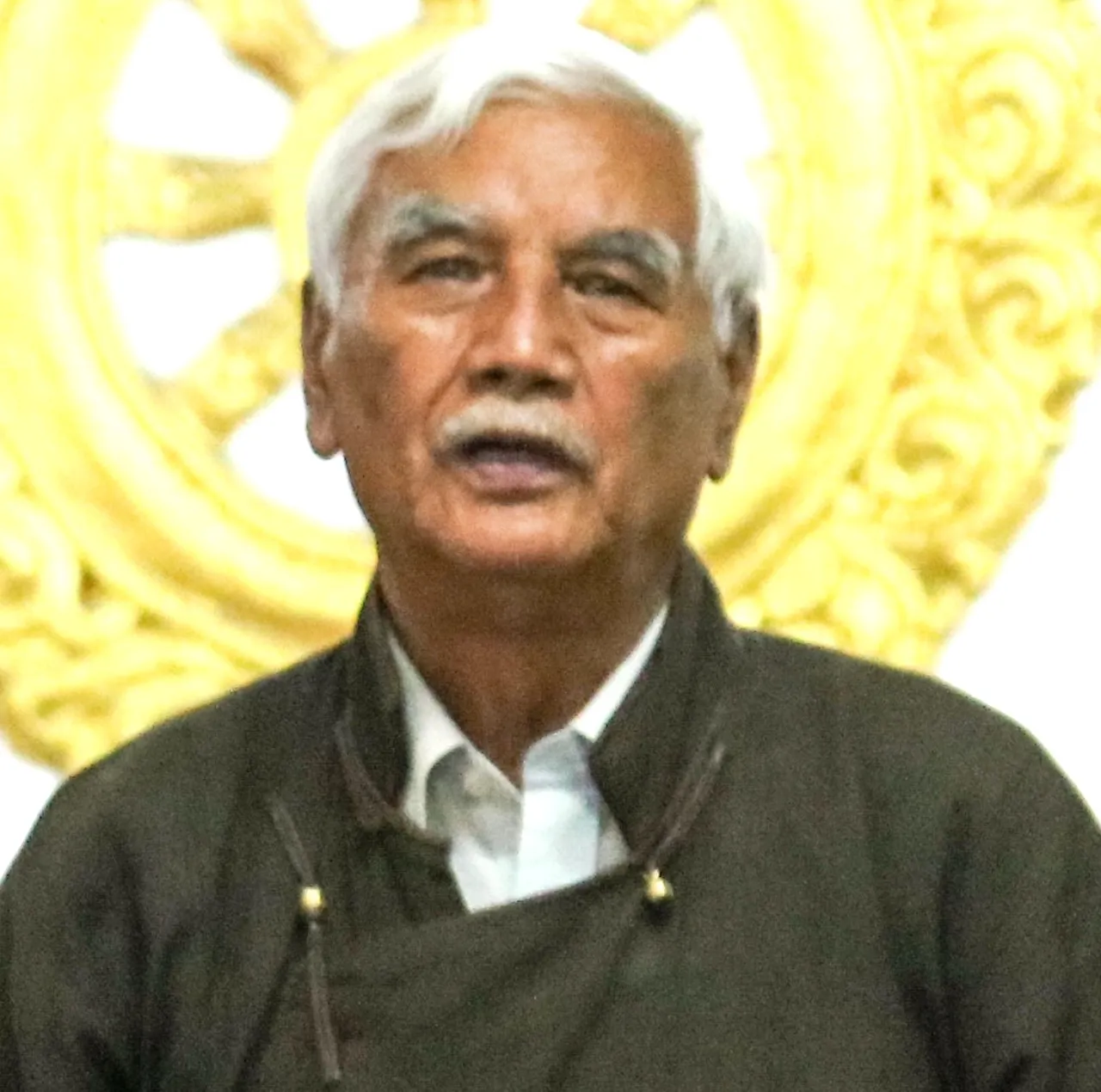
Calls elections an opportunity for grassroots empowerment; backs women’s political representation, eight elected councils and democratic participation
LEH: Amid growing political discord over the timing and conduct of the forthcoming Ladakh Autonomous Hill Development Council (LAHDC) elections, former Member of Parliament and senior Ladakh leader Thupstan Chhewang has made a strong appeal to the people of Ladakh to participate wholeheartedly in the December 4 polls, describing them as a historic opportunity to deepen grassroots democracy and empower the region’s people.
In a statement issued on Thursday, Chhewang sought to underline the political and institutional significance of the elections, particularly in view of the creation of six new districts and the reservation of one-third of the council seats for women for the first time.
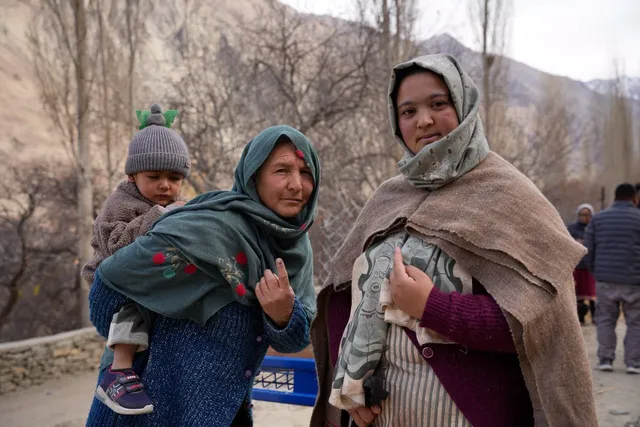
He urged women across Ladakh to seize the opportunity and claim their rightful place in decision-making institutions, saying the newly constituted councils would bring governance closer to people through elected representatives familiar with their respective regions and local concerns.
His appeal assumes particular significance as the December 4 election announcement has triggered considerable political opposition, with the Kargil Democratic Alliance (KDA) questioning the winter timing and delimitation exercise, while the Ladakh Apex Body (LAB), the Ladakh Buddhist Association and other organisations have raised objections and called for postponement or boycott of the electoral process.
The administration’s decision to hold elections to all eight Hill Councils has also exposed differences within Ladakh’s political and civil society leadership over whether participation in the electoral process should take precedence or whether the polls should be deferred until outstanding political and constitutional issues are addressed.
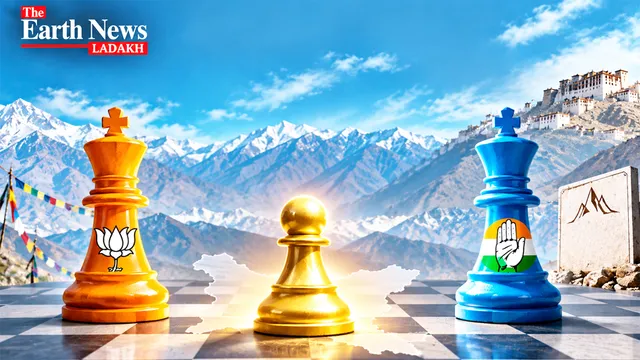
Against this backdrop, Chhewang has made a case for electoral participation, welcoming the decisions of both the Bharatiya Janata Party (BJP) and the Congress to contest the elections and expressing hope that other political parties and groups would also join the process.
He maintained that wider participation would strengthen democracy at the grassroots level.
Recalling Ladakh’s long political journey, Chhewang said the region had crossed several milestones over more than seven decades through sustained collective efforts. He recalled that the twin demands for separation from Jammu and Kashmir and Union Territory status had involved an uphill struggle, which people of Ladakh had pursued together.
Referring to the establishment of the Autonomous Hill Development Council in 1995, he said Ladakh’s leadership had adopted a pragmatic approach by accepting the Council as an initial step rather than rejecting it outright.
He argued that while the demand for Union Territory status continued, efforts were simultaneously made to strengthen the Hill Council, which gradually evolved from an institution with limited authority into an important body responsible for governing local affairs and safeguarding Ladakh’s culture and environment.
The statement appears to draw a distinction between the gradual institutional progress achieved by Ladakh and the prevailing political disagreements over the region’s future governance arrangements.
Chhewang also invoked Ladakh’s contribution to the country’s national security, asserting that the people had consistently demonstrated their ability to shoulder administrative responsibilities while maintaining their commitment to national unity and integrity.
He said Ladakh had stood with the country and the Army in defending India’s borders against hostile forces and had earned national goodwill as a strategically important border region.
In a pointed political message, he cautioned against any attempt to undermine the gains achieved through decades of struggle, asserting that those expressing sympathy towards China, directly or indirectly, would face firm opposition from people like him.
He also stressed that democratic rights, India’s honour and pride, and reverence for His Holiness the Dalai Lama were non-negotiable for the people of Ladakh. Emphasising the significance of the newly created administrative structure, Chhewang said that with Ladakh now having eight districts, it was only natural that each district should have its own elected Hill Council.
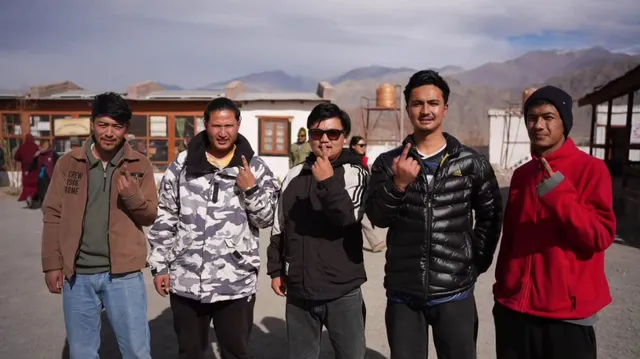
He described the December 4 elections as a potentially path-breaking development, particularly for thousands of young people aspiring to participate in public life and take responsibility for governing their own affairs. Calling for total and peaceful participation, he said no one should stand in the way of this opportunity.
His statement comes at a politically sensitive juncture when the Leh Apex Body and Kargil Democratic Alliance have been pressing for a resolution of Ladakh’s broader political demands, including constitutional safeguards and restoration of democratic rights, while questioning the administration’s decision to proceed with elections during the harsh winter months.
With the election process now underway, Chhewang’s appeal brings into focus an important question confronting Ladakh’s political landscape: whether the newly created eight-council structure will become a platform for greater grassroots representation and regional empowerment, or whether the prevailing political differences will overshadow the electoral exercise.