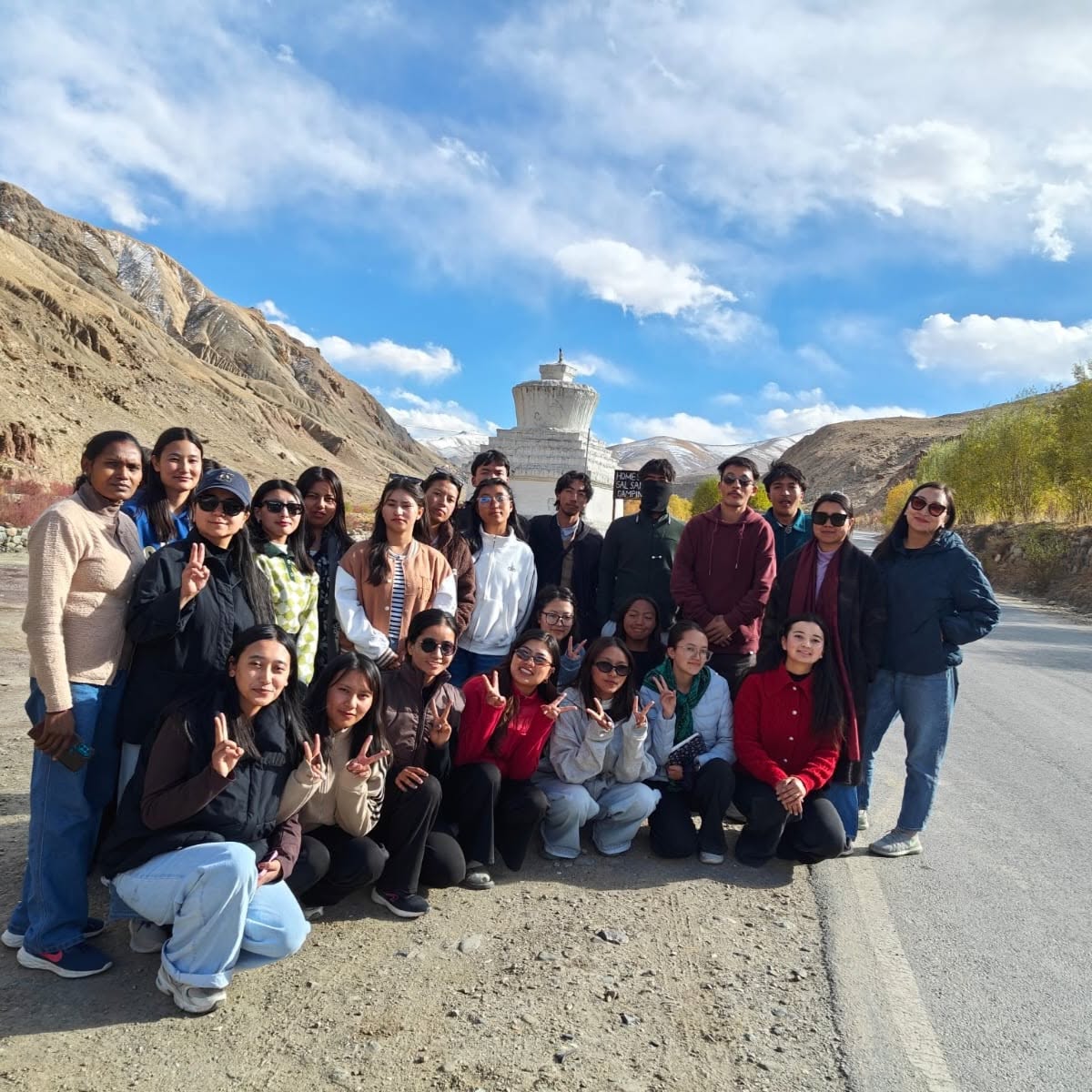
LEH: The Departments of Economics, Sociology and Hindi at Eliezer Joldan Memorial (EJM) College, Leh, jointly organised a one-day field trip to Gya village on October 10 to study climate change and its environmental and socio-economic implications through direct interaction with local residents and primary data collection.
The field visit was organised as part of a two-credit course for students of the third and fifth semesters, providing them with practical exposure to field research and an opportunity to examine local experiences and perceptions of climate change.
The research exercise was conducted under the theme “Climate Change and Its Impacts”, with Gya selected as the study site in view of its cold climatic conditions, historical and cultural background, and association with ice stupa initiatives. These factors made the village a relevant setting for exploring environmental changes and their implications for local communities.
During the visit, students interacted with local respondents and collected primary data related to the research theme. The exercise enabled them to engage directly with community members, understand field-based research methods and examine how environmental changes may affect local livelihoods and everyday life.
The fieldwork also provided students with an opportunity to connect classroom learning with practical research, particularly the process of gathering first-hand information and documenting community perspectives on environmental issues.
The students were accompanied by Dr Samina Rehman of the Department of Sociology, Dr Tsering Chorol of the Department of Hindi, and Dr Stanzin Padma of the Department of Economics, who guided them throughout the field visit.
The joint initiative brought together three academic disciplines to examine climate change through a field-based approach. It also highlighted the importance of recording local knowledge and community experiences to develop a better understanding of environmental challenges in Ladakh. The field trip formed part of the college’s efforts to promote experiential learning and interdisciplinary research, allowing students to apply academic concepts to real-world issues through direct engagement with local communities.