Smanla Dorje Nurboo questions Rs 489-Cr Leh proposal without House approval
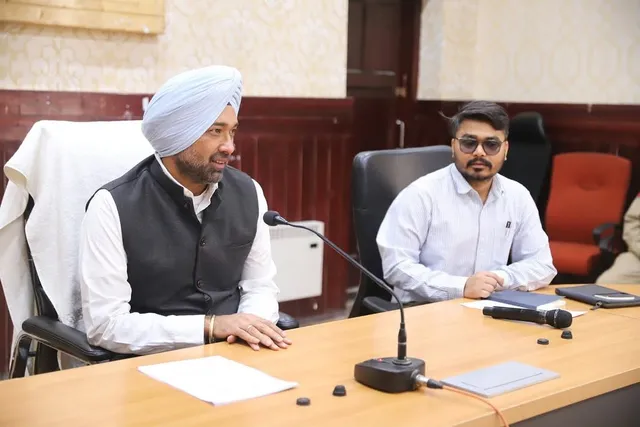
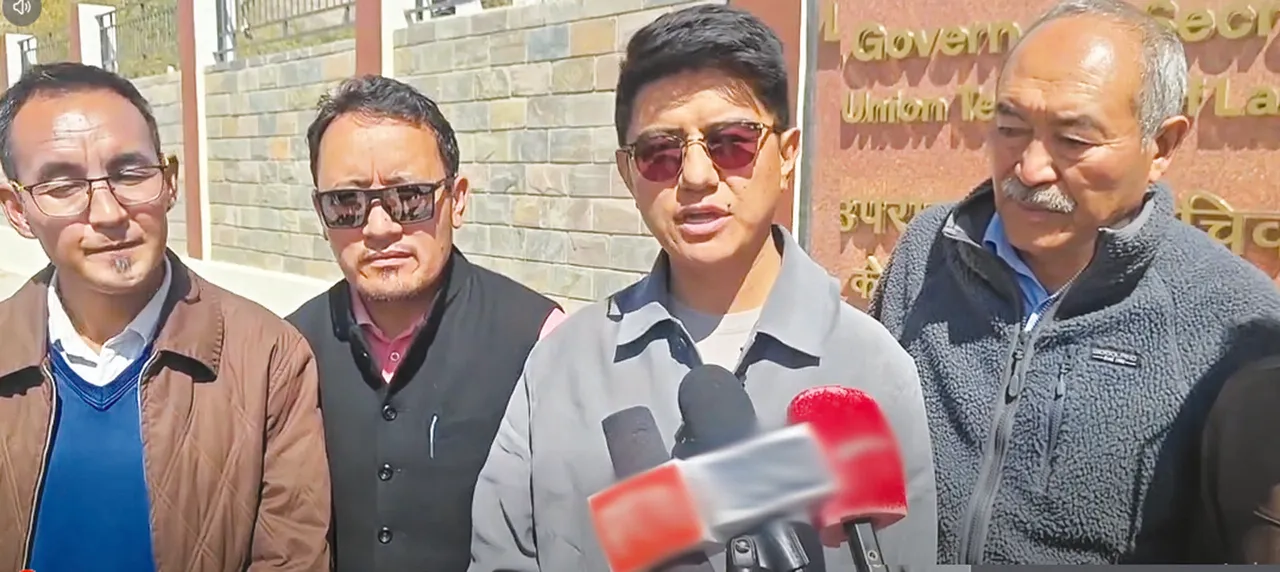
LEH: Senior Congress leader and former LAHDC Leh councillor Smanla Dorje Nurboo, joined by former councillors affiliated with the Congress and former Independent councillor from Chushul Konchok Stanzin, has questioned the procedure followed in the Capex review meeting held under Lieutenant Governor Vinai Kumar Saxena, arguing that decisions concerning new works and development priorities should be routed through the elected Hill Council.
Nurboo said the administration could review the progress and expenditure of ongoing works, but matters involving new works and their priorities could not, in his view, be decided without the participation of the LAHDC House. He cited Sections 23 and 32 of the LAHDC Act in support of his argument.
The former councillors said they had raised the issue at a press conference a day earlier, maintaining that while the government was within its powers to convene a review meeting, any discussion involving new works, alteration of schemes or determination of priorities required the involvement of elected representatives.
According to Nurboo and the former councillors, they were initially not allowed to enter the meeting venue and were permitted to do so later. They said Kargil CEC Dr Jaffer Akhoon attended the meeting, while the Leh CEC participated online.
They questioned why all sitting councillors had not been invited to a meeting in which, according to them, development works and priorities were being discussed.
A major point of concern raised by the former councillors was a proposed plan for Leh involving around Rs 489 crore. They questioned the proposal in the context of existing financial liabilities and said the issue of outstanding liabilities had also been raised during the meeting.
Nurboo and his colleagues argued that new works could not be introduced without approval of the House. With the elected Leh LAHDC House not presently in place, they questioned who had prepared and authorised the proposed Leh plan.
They said the Chief Secretary clarified during the meeting that the proposed Leh works would not be taken up during the current year. The former councillors subsequently questioned the purpose of their continued participation in the meeting if the Leh component was not being considered and later walked out, citing what they described as a lack of legal clarity over the proceedings.
Explaining their presence at the meeting despite their objections, the former councillors said they had attended to convey their protest directly to the Lieutenant Governor and place their concerns regarding what they described as a violation of the provisions and spirit of the LAHDC Act.
They also questioned the consideration of the Kargil component, arguing that if the proposed Leh works could not be taken up in the absence of an elected Leh House, the same principle should apply to Kargil if its House was also not in place.
The former councillors maintained that a Capex review was not confined to assessing expenditure already incurred. They argued that such reviews could also involve assessing remaining funds, modifying or dropping schemes and determining new priorities, and therefore should involve the elected House.
They further questioned why the full set of sitting Kargil councillors had not been invited to the meeting. While several councillors had resigned, they said those still holding office should have been consulted, particularly on new works and priorities affecting their respective constituencies.
The former councillors also questioned the participation of Kargil CEC Dr Jaffer Akhoon along with only a few Executive Councillors. They argued that the CEC alone could not determine the requirements and priorities of all constituencies without consulting the respective councillors.
The issue, they said, was not merely about the conduct of one meeting but about the role of elected representatives in determining development priorities at the district level. They maintained that constituency-level requirements could not be adequately assessed without the participation of councillors representing those areas.
The former councillors said the public mandate must be respected and that elected representatives should be given an opportunity to place constituency-level concerns before development priorities and new works are finalised.
They maintained that the appropriate LAHDC mechanism should be followed for such proceedings, with sitting councillors participating and the Chairperson presiding over the Council’s proceedings. They also questioned the choice of venue, arguing that meetings concerning Council priorities should be conducted through the concerned Council’s institutional mechanism. They concluded that decisions relating to new development works and district priorities should involve the elected representatives and the LAHDC House rather than being discussed without the participation of the full Council.