Karbalie calls compensation for Sept 2025 victims “salt on wounds”, demands up to ₹1.5 crore for bereaved families; KDA rejects Nautor land policy, announces programme in Kargil on Sept 23 at Hussaini Park
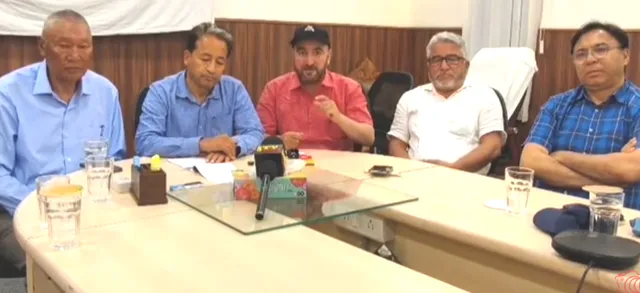
KARGIL: The Kargil Democratic Alliance (KDA) on Monday launched a sharp attack on the UT administration over the compensation announced for victims of the September 2025 violence, while accusing the administration of pushing through decisions that could have far-reaching implications for land rights in Ladakh.
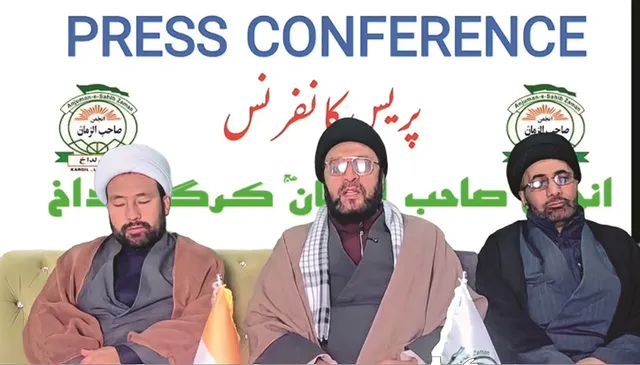
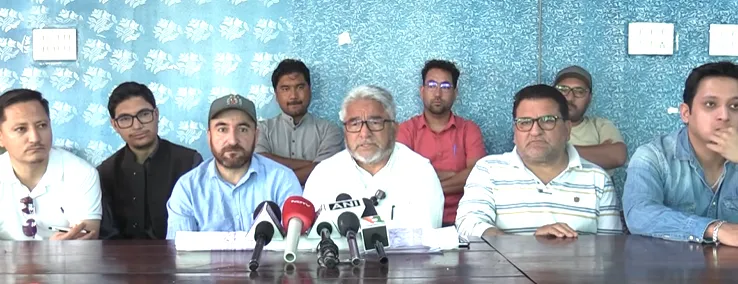
Addressing a press conference, KDA Co-Chairman Asgar Ali Karbalie termed the recently announced compensation inadequate and said the KDA “totally rejects” the package. He demanded compensation of ₹1 crore to ₹1.5 crore for the families of those killed, ₹50 lakh to ₹1 crore for critically injured persons and ₹30 lakh to ₹50 lakh for those who suffered minor injuries.
Karbalie said the loss of life could not be compensated in monetary terms, but argued that a “dignified compensation” was necessary for the victims and their families. He described the existing package as an affront to the sentiments of Ladakhis, alleging that the administration was adopting a “step-motherly” attitude towards the victims.
The KDA leader also demanded withdrawal of cases and sections imposed against those detained in connection with the September 2025 protests. He said the victims, injured persons and detainees would continue to receive the KDA’s support until they received what he described as “dignified justice”.
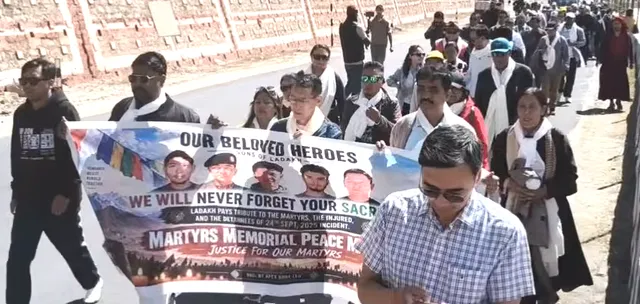
Recalling the events of September 2025, Karbalie alleged that four people were killed and more than 80 injured during the protests, while several people were detained under various sections. He said the KDA had raised the issue at various platforms, including meetings with government representatives, and would continue to press for justice.
The KDA also announced a programme in Kargil on September 23 at Hussaini Park to commemorate those killed and injured during the agitation and to highlight what it described as injustice against Ladakhis. Karbalie appealed to people across Ladakh, political parties, religious organisations and all sections of society to participate.
On the dialogue with the Centre, Karbalie said the September 9 meeting of the sub-committee of the Ministry of Home Affairs failed to produce any substantive outcome and largely repeated what had already been discussed during the May 22 meeting.
He said the KDA and Apex Body had expected a draft proposal covering the proposed legislative, executive and financial structures for Ladakh, along with constitutional safeguards, but alleged that these expectations were not met at the September 9 meeting.
According to Karbalie, the delay in finalising minutes of earlier meetings had already necessitated two informal meetings, while the KDA also claimed that commitments made during those discussions were not reflected in the latest talks.
The sharpest criticism, however, was directed at the administration’s Nautor notification and proposed rules under the Ladakh Autonomous Hill Development Councils Act.
Elaborating over Nautor Rules, Councillor Sajjad alleged that the proposed framework could undermine existing land rights of Ladakhis, particularly over agricultural land developed and cultivated by earlier generations. He questioned the rationale of requiring people to pay substantial sums to retain or obtain rights over land that, according to him, had been developed and brought under cultivation by their ancestors.
He alleged that land rights granted historically under Proclamation 38 and subsequent provisions, including Order 273 of 1960, were at risk of being diluted. The KDA Co-Chairman warned that the issue extended beyond land already formally recorded, claiming that unrecorded cultivated land could also be vulnerable.
Calling the proposed arrangement unacceptable, he alleged that it could eventually facilitate the entry of outsiders and corporate interests into Ladakh’s land market. The KDA demanded that the administration refrain from altering existing land rights until the broader question of constitutional safeguards for Ladakh is settled.
Karbalie also strongly rejected allegations that the KDA was not inclusive or lacked minority representation. He said the alliance had invited political parties and religious organisations to join its platform and cited the participation of Buddhist representatives in its deliberations and the High Powered Committee.
He specifically referred to former Ladakh Buddhist Association Kargil president Skarma Dorjey and LBA women’s wing vice-president Kunzes Dolma as examples of Buddhist representation in the KDA/Apex Body process. At the same time, he extended an open invitation to the Zanskar Buddhist Association and Kargil Buddhist Association to join the KDA if they supported the four-point agenda of the Apex Body and KDA.
KDA Co-Chairman Sajjad Kargili said the alliance’s struggle was not confined to any particular region, community or group, but concerned the future of the entire Union Territory.
He appealed for unity across Ladakh, arguing that the government would be more responsive if the people remained united. He alleged that despite what he described as unity across Ladakh, decisions were being imposed unilaterally on the region.
Sajjad said Ladakh’s strategic importance, natural resources and ecological fragility made it particularly important for people to have a meaningful say in decisions affecting their future.
Questioning what he described as a gap between the government’s stated commitment to democracy and the treatment of Ladakh, he said the people of the Union Territory would continue to press for democratic rights and constitutional safeguards.
He maintained that Ladakhis were not seeking anything outside the democratic and constitutional framework, and asserted that decisions affecting the “larger interest” of the people could not be imposed against their wishes.
The KDA leadership said it would continue its campaign on the issues of justice for the September 2025 victims, withdrawal of cases against detainees, enhanced compensation, protection of land rights and constitutional safeguards, while calling for broader public participation in its forthcoming programmes.