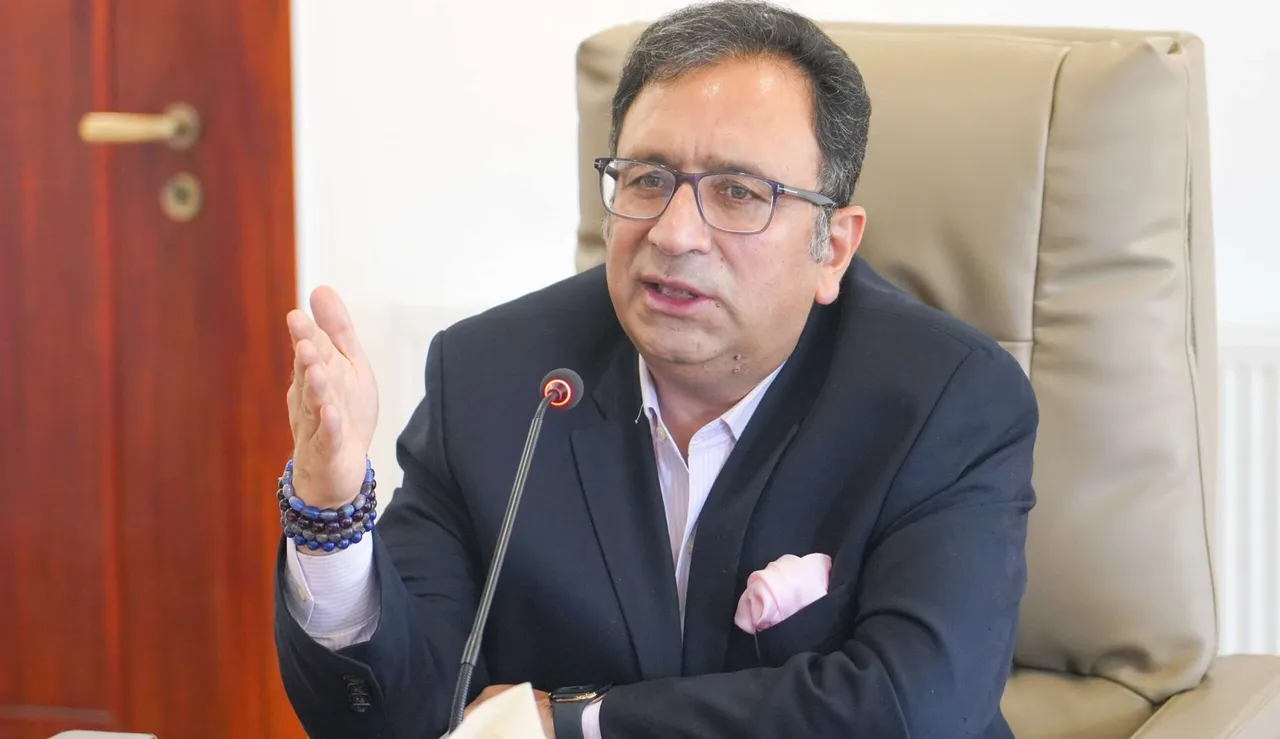
CS Ashish Kundra calls for blending traditional craftsmanship with modern technology, contemporary designs, stronger branding and wider national market linkages.
LEH: The Union Territory of Ladakh is looking to strengthen its pashmina sector through a coordinated strategy covering the entire value chain—from pastureland development and raw material procurement to spinning, weaving, processing, GI tagging, branding and access to national markets.
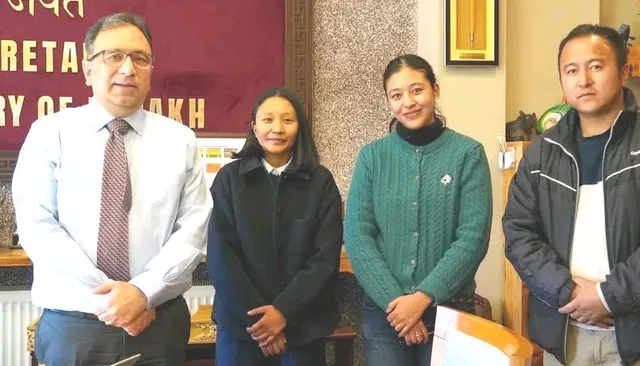
Chief Secretary, UT Ladakh, Ashish Kundra chaired a review meeting on Friday to assess the status of the sector and identify measures to address bottlenecks confronting pashmina producers, entrepreneurs and weavers. The meeting brought together senior officials from the Cooperative, Sheep Husbandry, Industries and related departments, along with representatives of SKUAST, SIDCO, pashmina entrepreneurs and weavers.
The deliberations assumed significance as Ladakh seeks to transform its globally recognised pashmina into a stronger, higher-value economic activity while protecting its traditional character and supporting the livelihoods of pastoral and weaving communities.
At the outset, the Secretary, Cooperative Department, presented an overview of ongoing initiatives, including pastureland development, raw material collection, payment mechanisms, marketing, branding, GI tagging and packaging. Reviewing raw material procurement, Kundra stressed the importance of clear timelines and timely settlement of payments, aimed at improving confidence among producers and strengthening the supply chain at its foundation.
A major component of the meeting was the availability and development of pasture and fodder resources, particularly for nomadic communities whose traditional migratory practices need to be factored into development planning.
Experts from SKUAST shared technical inputs on pasture improvement, winter fodder management and preservation of traditional knowledge. Kundra called for a scientific and integrated approach to pasture development, noting that fixed pasture models may not be suitable in areas where communities continue to follow traditional migratory practices.
He directed departments to explore convergence with the Irrigation Department and other agencies for integrated pasture and fodder management projects. Measures discussed included identification of suitable pasture areas, strengthening natural grazing zones, rock fencing, winter fodder augmentation and establishment of fodder banks using locally suitable grasses and crops.
The meeting also explored supplementary fodder programmes using barley, wheat and other locally available resources to reduce dependence on supplies from outside Ladakh during the harsh winter months.
The Chief Secretary sought direct feedback from entrepreneurs and weavers on constraints affecting production, spinning and weaving. Stakeholders highlighted the high cost of raw pashmina, expensive spinning processes, working-capital requirements and inadequate access to modern equipment and technical training.
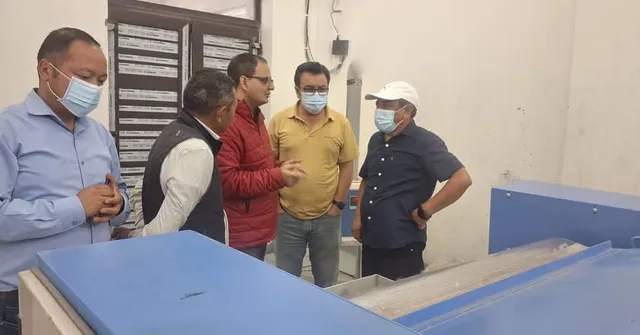
Kundra directed the concerned departments to identify spinning and weaving units requiring assistance and examine the deployment of suitable equipment along with technical training. He emphasised the need to assess both traditional hand-spun yarn and machine-spun yarn models, with the objective of improving consistency, quality and production capacity without compromising the traditional identity of Ladakh pashmina.
He also encouraged entrepreneurs to look beyond conventional markets and product lines by studying successful models elsewhere in the country and collaborating with designers and fashion professionals. Contemporary designs and new products, he said, should be developed while retaining the distinctive identity and value proposition of Ladakh pashmina.
The meeting placed particular emphasis on strengthening the identity and market positioning of Ladakh pashmina. Kundra directed the concerned departments to take forward the GI-tagging process entrepreneur-wise, while ensuring close coordination with primary societies and other stakeholders. He also directed that an awareness-cum-training camp for entrepreneurs be organised at the earliest, with information circulated in advance to enable participants to prepare adequately.
Beyond certification, the administration stressed the importance of effective branding, packaging and market positioning. Local entrepreneurs were encouraged to participate in initiatives such as Brand Ladakh and make greater use of national-level platforms to showcase their products.
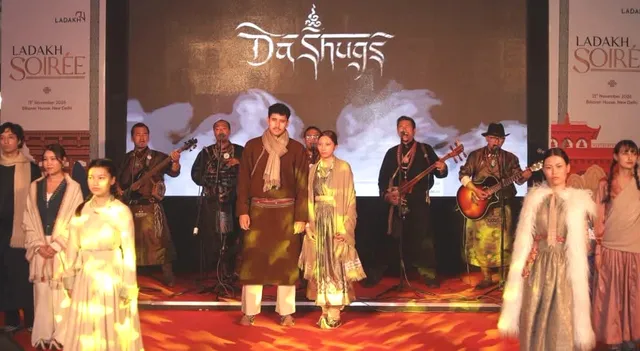
The Chief Secretary discussed upcoming opportunities for Ladakh pashmina in national markets, including proposed exhibitions and events in Delhi, fashion and designer showcases and dedicated stalls for Ladakh-based entrepreneurs. He stressed that participation in such platforms should go beyond immediate sales and be used to secure market exposure, business networking, designer collaborations and long-term commercial linkages.
Kundra also called for greater exposure visits and structured interaction with designers and industry experts so that local entrepreneurs can gain practical knowledge of contemporary design, product development, branding and marketing strategies.
The review meeting underlined the administration’s approach of linking pastureland and raw-material security with production capacity, quality enhancement, branding and market expansion, with the broader objective of building a sustainable and competitive pashmina ecosystem within Ladakh.
The meeting was attended by Secretary, Cooperative Department, Bhanu Prabha; Secretary, Animal and Sheep Husbandry Department, P.T. Rudra Goud; Consultant-cum-OSD, Special Projects, Moses Kunzang; Director Industries; Additional Secretary, Cooperative Department, Dr Mohammad Usman Khan; Managing Director, SIDCO, Sonam Norboo; Director Sheep Husbandry, Dr Iftikhar; Assistant Director, Sheep and Animal Husbandry; officials of the Industries Department; pashmina entrepreneurs, weavers and other senior officers and stakeholders.