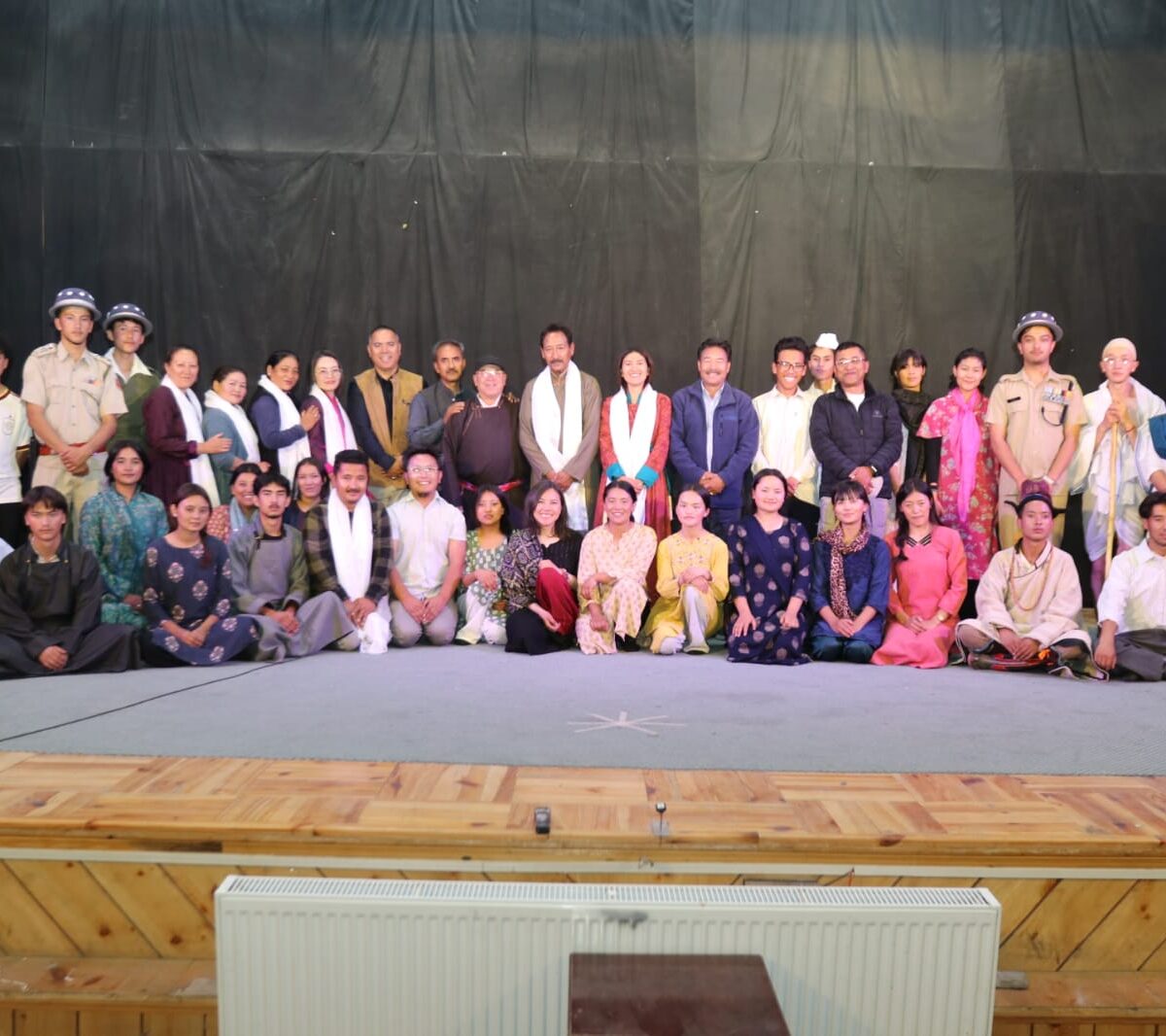
LEH: A Ladakhi-language theatrical production, “RANGWANG”, depicting Mahatma Gandhi’s historic Salt Revolution, was staged at the Lotsava Auditorium in Leh on Thursday as part of the National Theatre Festival 2026, drawing an enthusiastic response from a packed audience.
The programme was organised by the Sangeet Natak Akademi, New Delhi, to commemorate the 150th anniversary of Vande Mataram and Mahakavi Kalidas Jayanti under the theme “Bharat Speaks Through Theatre | Yuva Rangmanch Se Rashtra Jagran.”
Presented by Mandala Artworks, Ladakh, the play was directed by theatre practitioner Diksit Angmo, with production supervision by Tsetan Angchuk and Sonam Stobgais.
Performed in the Ladakhi language, RANGWANG offered a theatrical adaptation of the historic Salt Revolution, presenting Mahatma Gandhi’s civil disobedience movement in a format tailored to local audiences. The production featured 27 young artists, with music composed by Rigzin Gurmait and Tsering Chorol, while the lyrics were written by noted Ladakhi lyricist Tsetan Angchuk Nyamo.
The programme began with the rendition of Vande Mataram, followed by the National Anthem, before the theatre performance commenced.
Former Chief Executive Councillor of LAHDC Leh, Tashi Gyalson, attended the event as Chief Guest. Deputy Secretary, Ladakh Academy of Art, Culture and Languages (LAACL), Tsewang Paljor, and Nazir Hussain were Guests of Honour, while Mipham Otsal, National School of Drama alumnus, Sangeet Natak Akademi Award recipient and former General Council Member of the Akademi, along with Tundup Dorjey, General Council Member of the Sangeet Natak Akademi, participated as Special Guests.
Following the performance, the dignitaries interacted with the young performers, appreciating their artistic commitment and encouraging them to continue using theatre as a medium for cultural preservation, historical awareness and social engagement.
The production received an enthusiastic response from theatre enthusiasts and cultural lovers, with many audience members calling for more Ladakhi-language productions highlighting historical themes for younger generations.
The programme was conducted by Stanzin Angmo of Taru village.