‘Development will mean little without political empowerment; seeks legislature and constitutional safeguards for Ladakh’
LEH: Ladakh MP Mohmad Haneefa Jan has warned that developmental gains in the Union Territory could lose their meaning if the region’s core concerns over political empowerment, constitutional safeguards and protection of its distinct identity are not addressed.
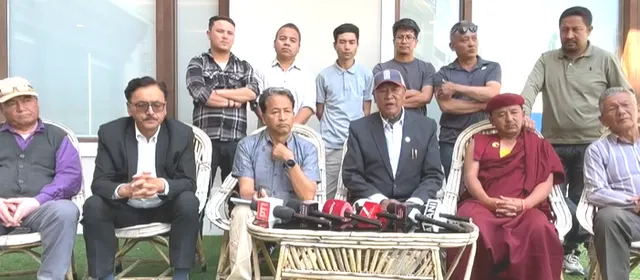
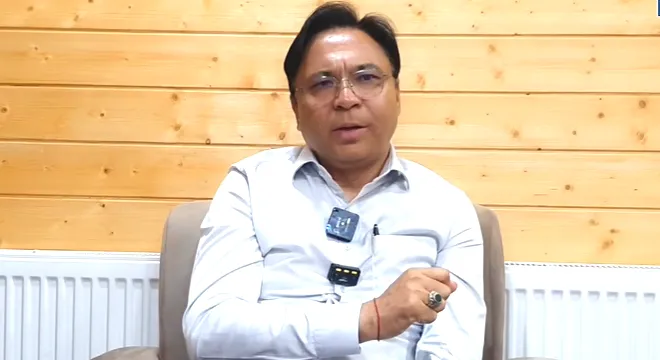
Speaking at a press conference, Jan said the “main concern” was not merely development but securing Ladakh’s future and ensuring that its people retain their dignity, identity and rights. “If our main concern, which is about our future and safeguards, is not fulfilled, then whatever development is taking place today will not remain meaningful for us,” Jan said, stressing that Ladakh’s distinct identity and way of life must be protected for future generations.
He cautioned that failure to secure adequate safeguards could have consequences for generations to come, saying the people of Ladakh could otherwise lose the dignity, identity and sense of ownership they have preserved over the years.
Jan also recalled the efforts of late Qamar Ali Akhoon and other senior leaders who, he said, had brought politically and religiously diverse organisations together on a common platform to collectively pursue Ladakh’s interests.
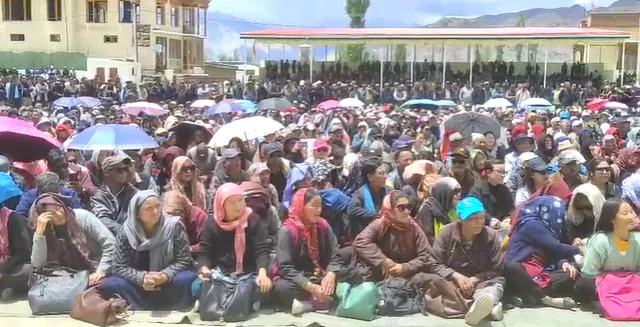
He said that despite political and organisational differences in Kargil, senior leaders had consciously kept those differences aside and initiated a united struggle keeping the future of Ladakh in mind. Jan particularly recalled the role of late Qamar Ali Akhoon, saying that leaders and organisations across the spectrum had joined the initiative after recognising the seriousness of the situation.
He said the movement had continued for nearly six years and had yielded some results through sustained engagement with the Government of India. The MP said the demand for statehood remained a long-term objective, while an elected Legislative Assembly was being sought as an immediate step towards restoring democratic representation in Ladakh.
According to Jan, discussions during the latest meeting of the High-Powered Committee had seen an important development, with the issue of providing Ladakh with a legislative setup being discussed more openly.
He said the government side had indicated that there was no fundamental obstacle to providing a legislature, but financial issues—particularly the question of meeting the revenue expenditure of such an arrangement—had emerged as a concern. “Statehood is our long-term demand, but immediately we had demanded at least a Legislative Assembly,” Jan said.
He explained that while developmental expenditure could be supported through grants from the Centre, meeting the UT’s revenue expenditure, including salaries, posed a different financial challenge.
Jan said the discussions had also opened the possibility of a phased political arrangement, with the minutes of the meeting reportedly containing an assurance that an elected legislature could be considered once Ladakh became financially self-sustaining.
He said this could potentially happen within five or 10 years, depending on when Ladakh’s own revenues become sufficient to meet its revenue budget. For Jan, however, political representation alone is not enough. He stressed that constitutional safeguards must accompany any future arrangement.
Making a significant point, Jan said Ladakh had been assured that the Government of India would examine the various protective provisions available under Article 371, from 371A to 371J, and select appropriate safeguards suited to Ladakh’s requirements.
He pointed out that different states enjoy different forms and degrees of protection under the Article 371 framework, with some having particularly strong safeguards. “The assurance was that whatever safeguards are required for Ladakh would be picked from these provisions and provided to Ladakh,” he said.
Jan indicated that such safeguards would be crucial to protecting Ladakh’s interests, identity and future while ensuring that the developmental process does not come at the cost of the region’s distinct character. The MP’s remarks underline the continuing political focus in Ladakh on achieving a balance between development, democratic representation and constitutional protection, with the demand for an elected legislature and robust safeguards emerging as immediate priorities even as the larger statehood demand remains on the table.