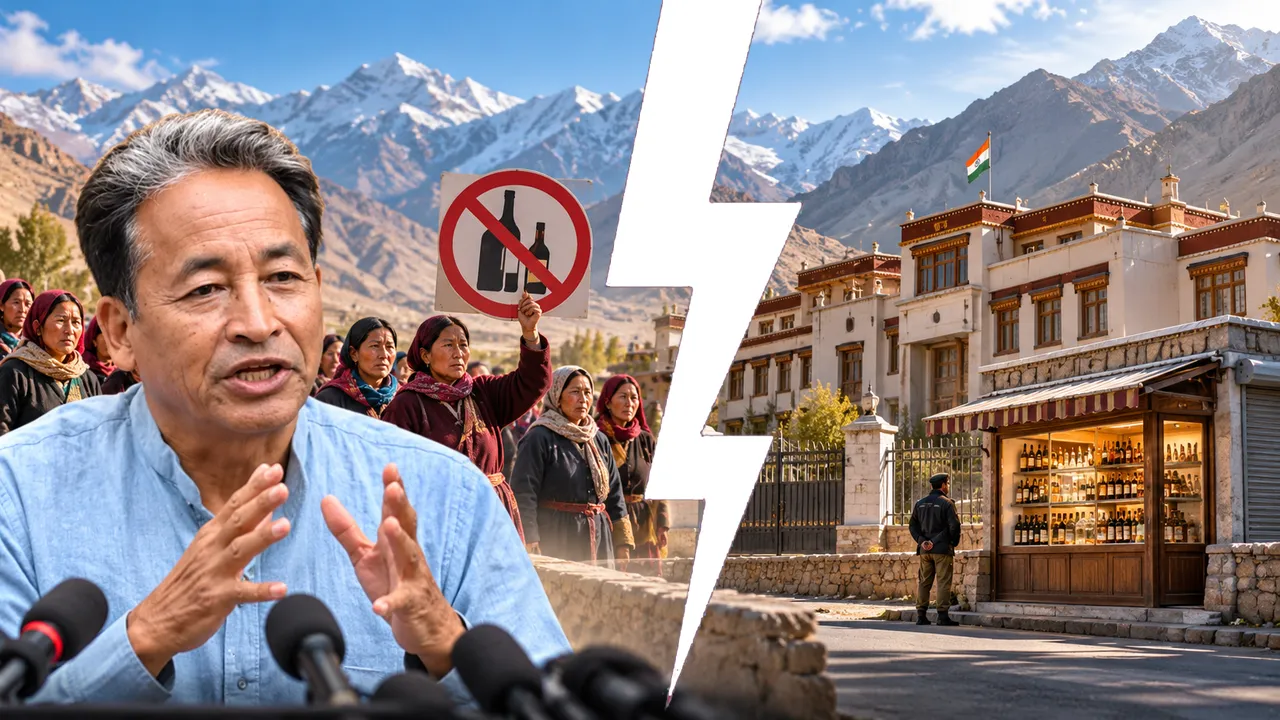
Administration says 2026–27 Excise Policy was rolled back in August; warns against spreading unverified claims amid ongoing protests by women’s organisations
LEH: The Union Territory Administration of Ladakh has strongly rebutted allegations by climate activist Sonam Wangchuk that liquor shops and bars were being opened across the region, asserting that only one liquor shop is currently operational in the entire Union Territory following the rollback of the new Excise Policy in August this year.
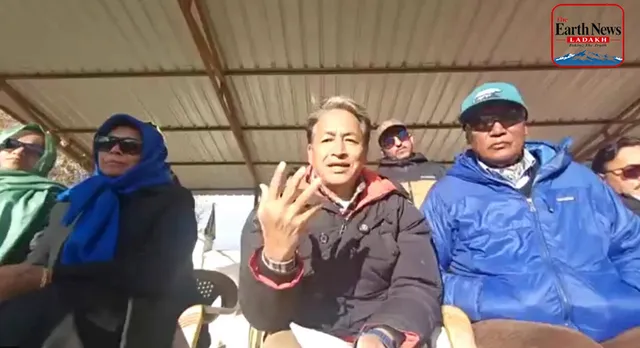
Taking serious note of Wangchuk’s remarks at a press conference at Ladakh Bhavan in New Delhi on October 22, the Administration termed his assertions “false”, “baseless” and “totally imaginary”, and advised him to verify facts from official sources before making statements to the national media and the public.
The clarification comes amid ongoing protests by women’s organisations in Ladakh demanding prohibition of liquor, with the issue of alcohol sales and licensing emerging as a significant public concern.
In its detailed rebuttal, the Administration said the new Excise Policy 2026–27, notified through S.O. 198 on June 1, 2026, was rolled back by Lieutenant Governor Vinai Kumar Saxena on August 26 following feedback and suggestions from the public and social organisations. The proposal to open wine shops under the new policy was also withdrawn, and the auction notice issued in pursuance of it was cancelled.
Consequently, the previous Excise Policy 2025–26, notified through S.O. 35 on April 4, 2025, was restored through S.O. 256 dated August 26 and continues to remain in force, the Administration stated.
According to the restored policy, only two liquor shops were permitted in Leh district, in Ward Nos. 4 and 6. However, an auction conducted for Ward No. 6 resulted in one wine shop becoming operational on October 14, while no bid was received for Ward No. 4. As a result, only one liquor shop is currently functioning across Ladakh, the official clarification said.
The Administration’s response directly contradicts Wangchuk’s assertion that a decision had been taken about two months ago to open liquor shops everywhere in Ladakh and that bars were being established in every street, locality and near educational institutions despite public opposition.
Wangchuk had alleged that the Lieutenant Governor was acting arbitrarily and claimed that 500 to 1,000 women were protesting against what he described as the forced expansion of liquor sales in Ladakh. He further alleged that repeated written objections and public protests had failed to prevent the opening of bars across neighbourhoods and near schools.
Rejecting the allegations, the Administration maintained that the withdrawal of the new policy and cancellation of the proposed wine-shop auctions demonstrated that the concerns and sentiments expressed by people and social organisations had been taken into consideration.
On bars and hotel licences, however, the Administration clarified that liquor-serving establishments do operate under the existing licensing framework. According to the official figures, 50 retail liquor vends attached to restaurants are operational across Ladakh—38 in Leh, seven in Nubra, three in Zanskar and two in Changthang. In addition, two beer bars are operating in Leh.
The Administration further stated that nine hotels in Leh hold liquor licences, of which four were issued this year following applications, while one hotel in Nubra also applied for and obtained a licence during the current year.
It asserted that licences are issued only to applicants meeting the prescribed norms, including distance requirements relating to highways, religious institutions and educational establishments. The same distance criteria, it said, apply to licences issued to hotels.
On this basis, the Administration rejected Wangchuk’s claim that bars were being opened indiscriminately in every street, locality and around schools, stating that the allegations did not reflect the official licensing position.
The rebuttal distinguishes between the number of standalone liquor shops and the wider presence of licensed establishments serving alcohol, including restaurant-attached retail vends, beer bars and hotels. While asserting that only one standalone liquor shop is operational in the entire UT, the Administration’s own figures confirm the operation of multiple licensed liquor-serving establishments under the existing policy.
In its concluding remarks, the Administration urged Wangchuk to exercise restraint and verify information through official channels before making public statements, alleging that his claims could create unnecessary public alarm and spread misinformation.