Leaders put legislature, Article 371, compensation, case withdrawals and inquiry commission report at centre, warns of escalation over further delay
LEH: The Leh Apex Body (LAB) has temporarily postponed its proposed Pad Yatra from Kargil to Leh, which was scheduled to begin on September 10, following the announcement of a fresh round of talks between Ladakh leaders and the Union Ministry of Home Affairs (MHA) on September 9.
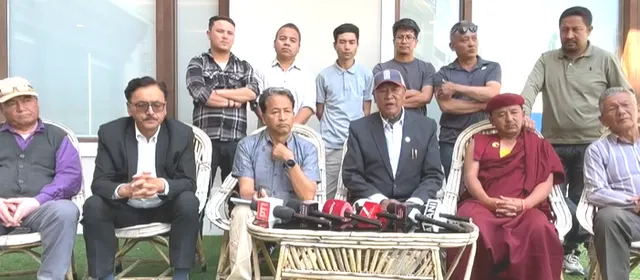
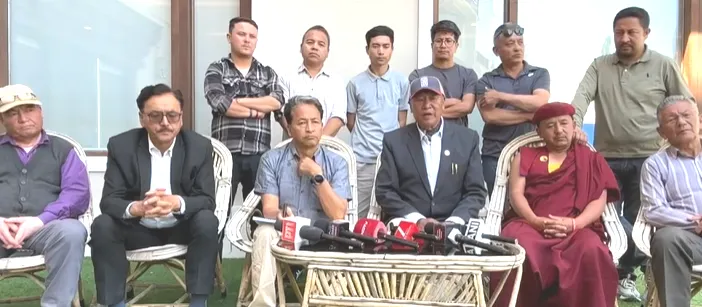
Addressing a press conference in Leh, LAB leaders said the decision was taken to give the upcoming Sub-Committee-level talks an opportunity to produce a meaningful outcome on Ladakh’s long-pending demands. However, they made it clear that the Pad Yatra has not been called off and could be revived in a different form if the talks fail to deliver.
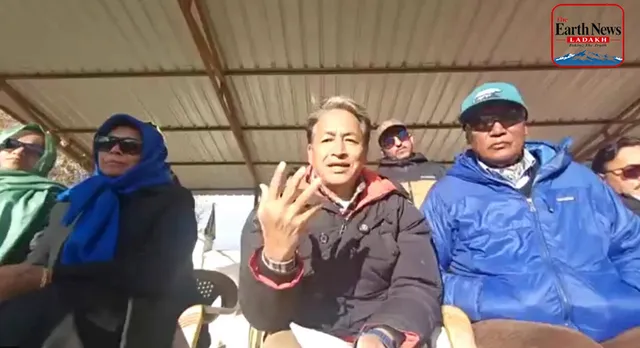
LAB co-chairman Sonam Wangchuk said the proposed two-week-long march from Kargil towards Leh had been postponed in view of the September 9 meeting. He said that if the talks result in substantial progress, there may be no need for an extensive agitation; but if the dialogue ends in “delay” or fails to produce concrete action, the planned mobilisation will be intensified.
According to Wangchuk, the Pad Yatra would instead be organised around five days before September 24, the first anniversary of last year’s violent protests, and could take the form of marches originating from different directions. He appealed to people across India who support Ladakh, its environment and the region’s border communities to participate if the agitation is resumed.
The LAB leadership said the outcome of the September 9 talks would be judged particularly against the commitments and decisions taken on May 22, with Wangchuk stressing that the administration would be expected to come prepared with a detailed draft on the proposed Ladakh Assembly and its powers.
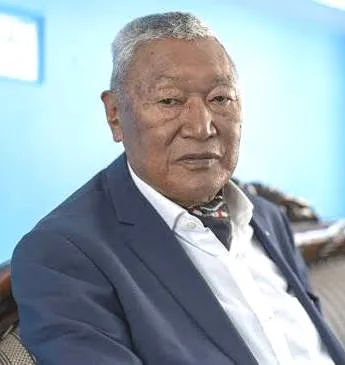
LAB Chairman Tsering Dorjey Lakruk welcomed the announcement of the MHA talks but cautioned that the mere holding of another meeting would not be enough.
He said the two principal issues—legislature at the UT level and constitutional safeguards under Article 371—would remain central to the discussions. If the government comes forward with a constructive, result-oriented approach, the LAB would welcome it, he said, but warned that the organisation would intensify its agitation if the talks fail to produce tangible progress.
“We don’t know what result will come out,” Lakruk said, while making it clear that the LAB has several plans to intensify its activities and would announce them progressively depending on the outcome of the dialogue.
The leaders also indicated that September has been designated as a month to remember those killed, injured and jailed during last year’s agitation, with a series of programmes planned across Ladakh.
A major concern raised at the press conference was the continued delay in the report of the inquiry commission constituted to investigate the September 24 violence. Lakruk said nearly a year had passed without the findings being made public and argued that withholding the report would amount to injustice to those who lost their lives.
Wangchuk similarly said the LAB expected “clarity” on the commission’s findings by September 9, asking the government to make public what happened during the violence and establish accountability. The LAB leadership also strongly objected to what it described as differential treatment in the withdrawal of criminal cases related to last year’s agitation.
Lakruk welcomed the Supreme Court-related development concerning cases registered against protesters at Jantar Mantar and elsewhere, but questioned why similar relief had not been extended to people from Ladakh who were arrested or booked during the September 24 events.
He alleged that only around 25 cases had so far been withdrawn, while the remaining cases continued to hang over the protesters. Lakruk claimed that citing court-related difficulties for the delay was not justified and accused the government of keeping the cases pending as a possible “bargaining” tool.
The LAB chairman alleged that protesters in Ladakh had faced disproportionate action despite, according to him, being unarmed, and said the region’s people should not be subjected to what he termed a “double standard”.
He demanded withdrawal of all cases against those involved in the agitation and sought compensation for the families of those killed and those seriously injured, arguing that they should receive treatment on the same basis as other affected protesters.
Wangchuk said the LAB would also look for concrete movement on compensation to the families of those killed on September 24, withdrawal of cases against protesters and publication of the inquiry commission’s report during or immediately after the September 9 dialogue.
He said that if the government makes progress on these issues and presents a credible framework for Ladakh’s proposed legislature and its powers, the need for further large-scale mobilisation could be reconsidered.
However, if the talks fail to address these issues, Wangchuk warned that the LAB could move towards larger protests after September 9, including programmes at the village and district levels and a renewed nationwide mobilisation in support of Ladakh. The LAB leaders thus presented September 9 as a critical test of the Centre’s willingness to move beyond dialogue towards concrete action, with the postponed Pad Yatra being retained as a potential next step should the talks fail to satisfy Ladakh’s leadership.