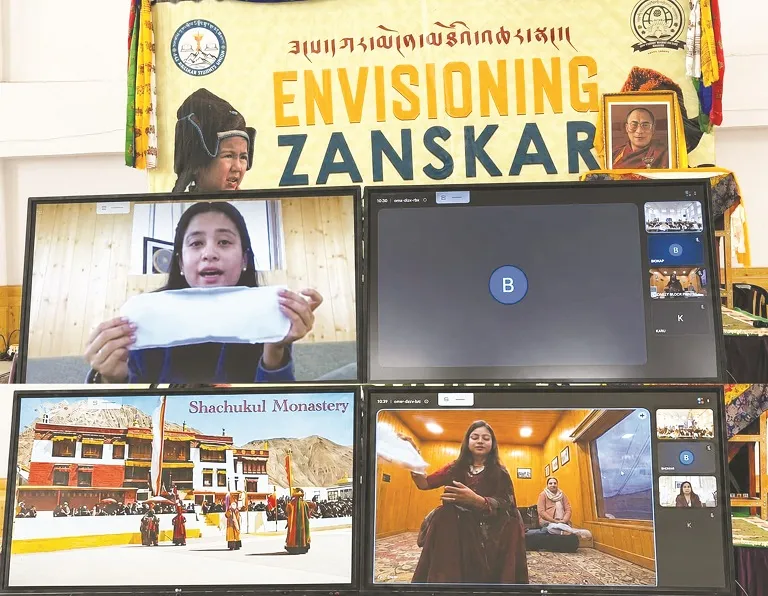
ZANSKAR: The Indian Army’s Trishul Division of on Thursday participated in the Envisioning Zanskar Summit 2026, presenting two women-led initiatives focused on menstrual hygiene, heritage conservation and sustainable livelihoods during a video conference session at the three-day youth summit.
The Division showcased the BioNap Project, presented by Mrs Sonal Mediratta, which promotes menstrual hygiene through affordable, eco-friendly biodegradable sanitary napkins. The initiative seeks to improve access to sustainable menstrual health products while advancing awareness and community well-being.
In another presentation, Mrs Kanika Dhyani highlighted Acheley Block Printing, an initiative aimed at preserving Ladakh’s traditional block-printing craft while creating sustainable livelihood opportunities for local women through the promotion of indigenous craftsmanship.
The presentations formed part of the Trishul Division’s engagement with the summit, which is centred on youth participation, sustainable development and the future of Zanskar. The initiatives underscored the role of community-led interventions in addressing social challenges while preserving the region’s cultural heritage.
According to the organisers, the session drew an encouraging response from participants, who appreciated the focus on women’s empowerment, environmental sustainability and the revival of traditional skills. Attendees were also invited to visit the respective workshops to gain first-hand insight into the implementation of both initiatives and their impact on local communities.
The Trishul Division’s participation reflected its continued engagement in community outreach activities that promote inclusive development, cultural preservation and sustainable livelihood opportunities in the region.
Earlier in the day, Summit’s first panel discussion, titled “Zanskar at a Crossroads: Balancing Development and Environmental Sustainability,” examined the environmental implications of climate change, expanding tourism and unplanned development in the fragile Himalayan ecosystem. Moderated by Dr Mohd Salim, Assistant Professor, Department of Environmental Science, Government Degree College Zanskar, the session featured Dr Tsewang Namgyal and Lobzang Namtak, who underscored sustainable water management, biodiversity conservation and responsible utilisation of natural resources as essential elements of future development planning.
The summit forms part of a broader initiative to engage young people in shaping Zanskar’s future by promoting informed dialogue on sustainable development, entrepreneurship, environmental conservation and the preservation of Ladakh’s cultural identity.