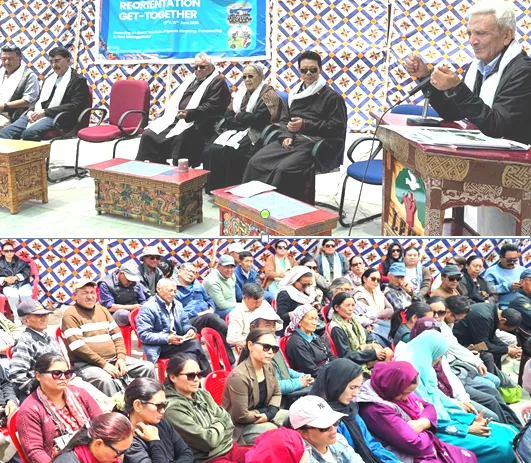
Leh: In a major initiative aimed at promoting sustainable tourism and reviving traditional agriculture, the Ladakh Environment and Health Organisation (LEHO) conducted a two-day orientation programme that brought together more than 100 participants from 21 villages across the Union Territory of Ladakh.
The programme witnessed the participation of farmers, homestay owners, members of self-help groups (SHGs) and village Nambardars, providing a platform to discuss challenges, review progress and chart future strategies for strengthening community-based ecotourism in the region.
The orientation focused on improving the functioning of rural homestays while exploring ways to revive traditional farming practices under LEHO’s Ecotourism Project. Experts and stakeholders highlighted the importance of integrating tourism with agriculture and cultural preservation to ensure sustainable livelihoods for local communities.
Among the key resource persons were the President of the Ladakh Trade and Travel Association (LTTA), the proprietor of Ladakh Basket, a retired Chief Agriculture Officer and other subject experts. Through a series of interactive sessions, they shared insights on sustainable tourism practices, organic food production, value addition of local products and the preservation of Ladakh’s unique cultural identity.
Speakers stressed that ecotourism must be developed in a manner that protects the fragile Himalayan ecosystem while generating economic opportunities for rural households.
As part of the programme, participants also visited the Krishi Vigyan Kendra (KVK), Stakna, where they underwent a one-day practical training session on soil fertility and pest management. Agricultural experts provided hands-on guidance on maintaining soil health, orchard management, natural farming techniques and composting methods aimed at enhancing agricultural productivity in an environmentally sustainable manner.
The organisation has already facilitated the establishment of 240 homestays across 21 villages in Ladakh. These homestays serve as a cornerstone of the ecotourism project, helping diversify rural incomes while encouraging the revival of traditional agricultural practices and conservation of local culture.
Addressing the participants, LEHO Founder and President Dr. Mohammed Deen urged local communities to play an active role in protecting Ladakh’s fragile environment. “People come to Ladakh to experience its pristine natural attractions. Protecting our mountains, lakes, rivers, wildlife and landscapes is essential to making tourism more sustainable and beneficial for local communities,” he said.
The programme concluded with a collective commitment from participants to promote responsible tourism, strengthen organic farming practices and contribute to preserving Ladakh’s rich natural and cultural heritage for future generations.