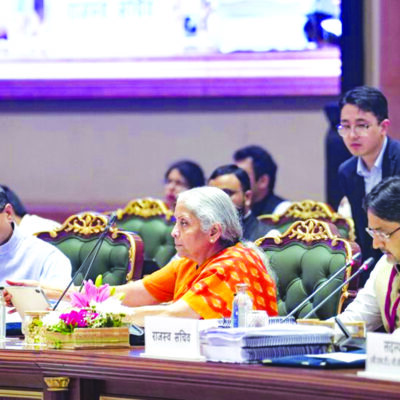
A significant aspect of the exercise will be addressing field-level challenges in identifying and covering unregistered and informal textile units, seasonal units and locations that may be difficult to access
HABEEL SAGAR
LEH: The Administration of Union Territory of Ladakh has constituted a State Level Apex Committee (SLAC) to oversee planning, coordination, monitoring and timely implementation of the Integrated Textile Census 2026–27 across the UT.
The committee has been constituted following a proposal from the Industries & Commerce Department. The Chief Secretary, UT Ladakh, will head the committee as its Chairperson. Its members include the Administrative Secretary, Industries & Commerce Department; Director, Industries & Commerce; Director, Economics & Statistics, Planning, Development & Monitoring Department; and a representative of the Ministry of Textiles, Government of India, or its concerned regional/field office.
The Deputy Commissioners/District Magistrates of Leh and Kargil have been designated as Special Invitees, while representatives of relevant industry associations, weavers’ and artisans’ bodies and other concerned organisations may also be invited as required. The Chairperson has also been empowered to nominate other officers or representatives as members or special invitees.
The apex committee has been entrusted with a wide-ranging mandate aimed at ensuring that the census produces a comprehensive and reliable picture of Ladakh’s textile ecosystem.
Among its key responsibilities will be reviewing the UT’s preparedness in terms of manpower, field infrastructure, training, digital devices and connectivity, administrative records, existing databases and field logistics. It will also monitor district-wise progress against approved milestones and identify areas requiring additional support or corrective action.
A significant aspect of the exercise will be addressing field-level challenges in identifying and covering unregistered and informal textile units, seasonal units and locations that may be difficult to access. The committee will also have to take into account issues arising from duplication, migration of artisans and workers, and non-response during enumeration.
The committee will coordinate with district administrations for nomination of District Nodal Officers and establishment of suitable district-level implementation mechanisms. It will also facilitate sharing and validation of relevant administrative databases maintained by the UT for preparing the Census frame, subject to applicable legal and data-protection provisions.
The Administration has specifically tasked the committee with ensuring uniform adoption across Ladakh of the prescribed Census methodology, questionnaire, field manuals, digital application and quality-control protocols.
The panel will recommend measures to the High-Level Steering Committee on issues requiring policy-level intervention and facilitate timely completion of enumeration and submission of validated UT-level Census data.
It will review progress at major milestones and issue necessary directions concerning resources and administrative coordination. Importantly, the committee will also review and recommend the final UT-level Census data before its submission to the Ministry of Textiles, Government of India.
The committee may co-opt representatives from other Ministries and Departments, District Administrations, industry associations and domain experts whenever their expertise is required. It will meet as and when necessary to assess progress and resolve implementation-related issues.
The Industries & Commerce Department, UT Ladakh, has been designated as the Nodal Department and Secretariat of the committee. It will coordinate meetings and communications, provide administrative support, prepare progress reports and undertake other related responsibilities.
The Director, Industries & Commerce, UT Ladakh, will serve as the State Nodal Officer (SNO) for coordination with the Ministry of Textiles and the Office of the Textile Commissioner, besides monitoring the overall implementation of the census in Ladakh.
The constitution of the apex committee provides an institutional framework for carrying out the Integrated Textile Census in Ladakh, bringing together the UT Administration, district authorities, the Union Ministry of Textiles and representatives of the textile, weaving and artisan sectors under a coordinated mechanism.